By Interestana AI Editorial — AI-drafted, human-overseen. How we report
Bitcoin Futures Yields Plummet Below Treasury Notes
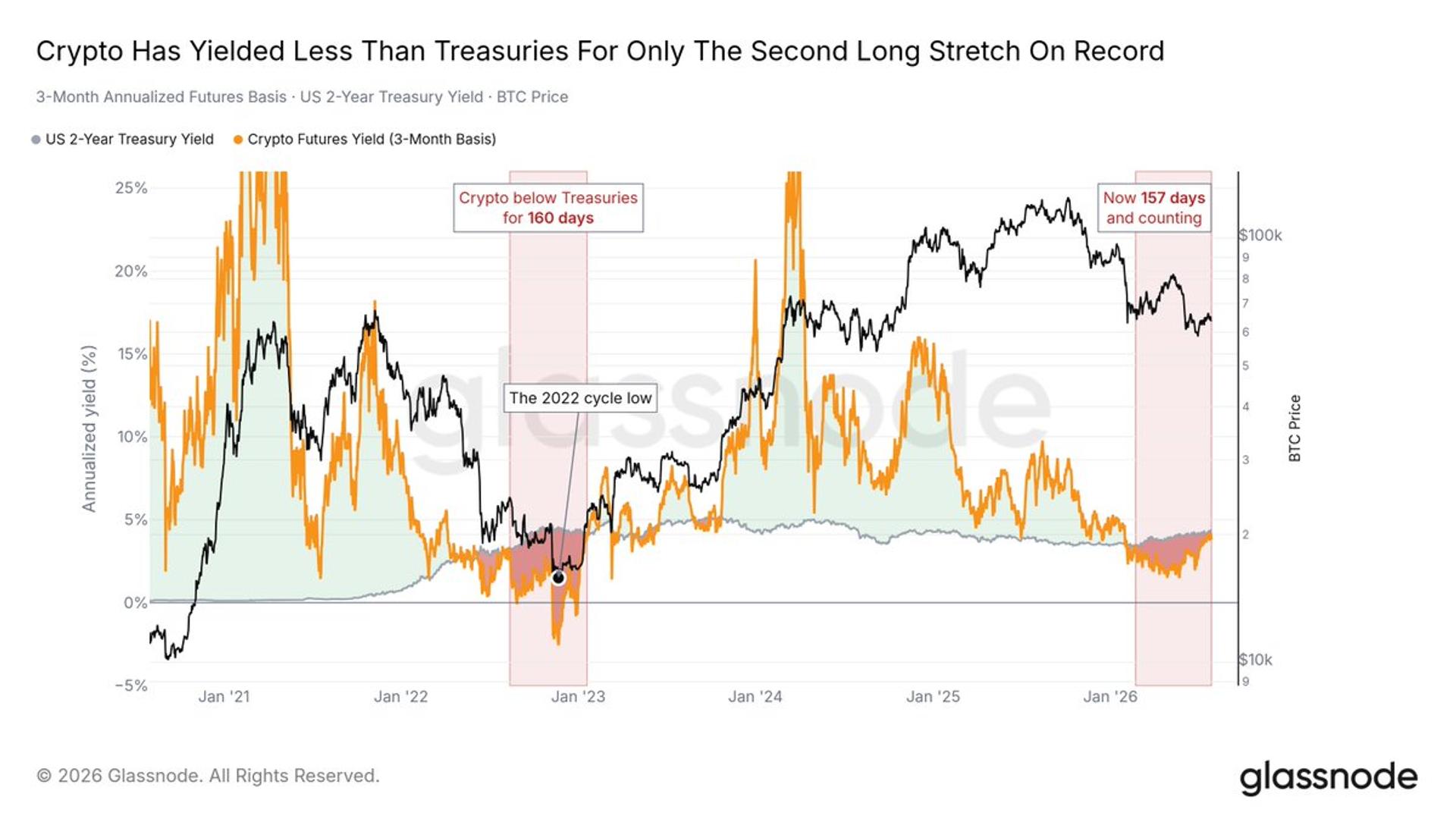
Bitcoin futures' quarterly basis yields have experienced a dramatic decline, falling below the yields offered by two-year U.S. Treasury notes since February. This marks a significant departure from previous market conditions where Bitcoin futures consistently offered a richer carry, often exceeding 20% annually. The current yield on Bitcoin futures is now less than that of U.S. Treasury notes, indicating a substantial shift in the cryptocurrency's derivatives market. This development suggests a shrinking of arbitrage opportunities that previously attracted significant capital to the Bitcoin futures market. Arbitrageurs typically exploit price discrepancies between spot markets and futures markets to generate risk-free profits. The reduction in these opportunities implies a more efficient and potentially maturing market for Bitcoin derivatives.
The collapse in Bitcoin futures yields is a strong indicator of changing market sentiment and structure. Historically, the Bitcoin futures market has been characterized by a significant contango, where futures prices are higher than the spot price, reflecting a premium for holding the asset over time. This premium was often driven by strong demand for leveraged long positions and a general bullish outlook. The current situation, where the basis yield is lower than a relatively safe asset like U.S. Treasury notes, suggests that the demand for such premium has diminished considerably. This could be attributed to several factors, including increased market maturity, reduced speculative fervor, or a shift in investor strategies. The fact that this trend has persisted since February underscores its significance and suggests it is not a short-term anomaly.
This yield compression has profound implications for traders and investors who have relied on the carry trade strategy within the Bitcoin futures market. The strategy involved selling futures contracts while simultaneously buying the underlying Bitcoin to capture the difference in price, a practice that was once highly lucrative. With yields now trailing Treasury notes, the attractiveness of this strategy is significantly diminished, potentially leading to reduced trading volumes and a reallocation of capital. Furthermore, the move indicates a potential cooling of speculative interest in Bitcoin, as the cost of holding leveraged positions has increased relative to the potential returns from the futures basis. The comparison to U.S. Treasury notes, a benchmark for risk-free returns, highlights the diminished risk-reward profile of Bitcoin futures carry trades. This transition suggests a market that is becoming less driven by pure speculation and more by fundamental value or longer-term investment horizons, although the exact drivers of this shift are complex and multifaceted, likely involving a combination of regulatory developments, institutional adoption, and macroeconomic factors influencing risk appetite across all asset classes.
Original source — read the full reporting at the publisher:
Read on CoinDeskGet the weekly AI digest
AI news + new model releases, weekly. Drafted by our agents, reviewed by humans.