By Interestana AI Editorial — AI-drafted, human-overseen. How we report
Tesla Roadster Unveiled October 1 With SpaceX Thrusters
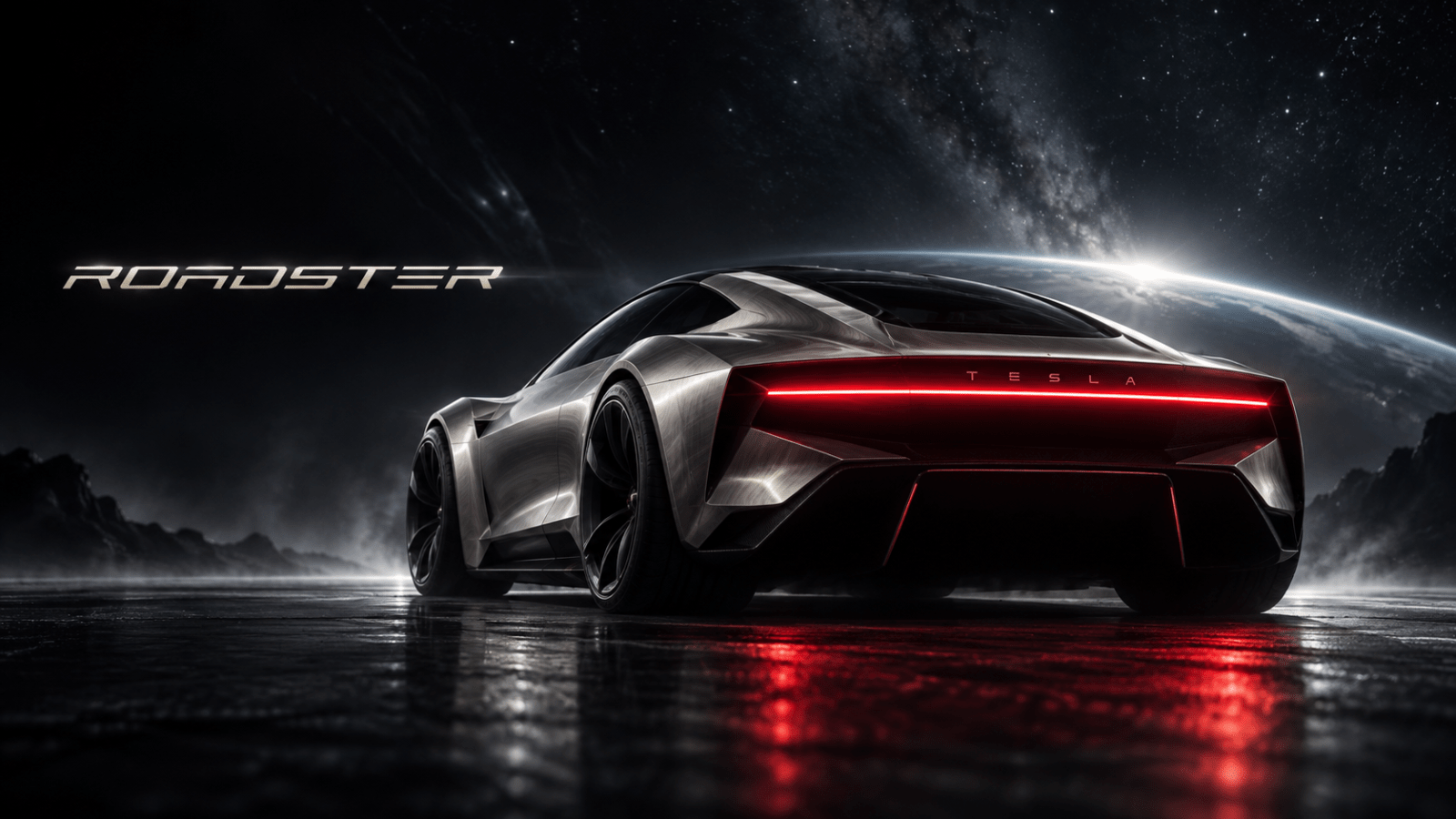
Tesla is set to unveil its long-awaited new Roadster on October 1, marking over eight years since the initial concept was first revealed in 2017. A recent teaser released this past weekend indicates that the production model will incorporate Tesla's distinctive "Cyber" design elements, a stylistic choice that has been polarizing in previous applications. The teaser prominently features SpaceX cold gas thrusters firing from the rear of the vehicle, a feature that Elon Musk has previously alluded to as part of "radical design changes." These thrusters, typically used for attitude control in spacecraft, suggest a significant departure from conventional automotive engineering and hint at performance capabilities beyond typical electric vehicles.
However, the necessity of a complete redesign for the Roadster has been questioned, with some observers suggesting that the primary need was for the vehicle to reach production and delivery stages. The Roadster was initially announced with ambitious performance targets, including a 0-60 mph acceleration time of 1.9 seconds and a top speed exceeding 250 mph, positioning it as a hypercar. The inclusion of SpaceX technology, such as the cold gas thrusters, could further enhance its performance envelope, potentially enabling features like improved braking, acceleration, or even novel maneuverability. This integration of aerospace technology into a consumer vehicle represents a significant engineering challenge and a bold statement from Tesla.
The original Tesla Roadster, launched in 2008, was the company's first production car, based on a Lotus Elise chassis and demonstrating the viability of electric powertrains for performance vehicles. It achieved a range of approximately 245 miles on a single charge. The second-generation Roadster, first previewed in 2017, was intended to surpass its predecessor significantly in every metric. The extended development timeline for the second Roadster has led to considerable anticipation and speculation within the automotive industry and among Tesla enthusiasts. The company has faced numerous production delays and shifts in focus, including the development of the Cybertruck and the expansion of its autonomous driving capabilities, which may have contributed to the Roadster's protracted gestation period.
Musk's promise of "radical design changes", coupled with the visual evidence of SpaceX thrusters, suggests that the new Roadster aims to redefine performance expectations for electric vehicles. The "Cyber" design treatment, characterized by sharp angles and a minimalist, almost brutalist aesthetic, was first seen on the Tesla Cybertruck. Applying this design language to the Roadster could result in a vehicle that is visually striking and immediately recognizable as a Tesla product, albeit one that might divide opinion. The October 1 unveiling date will finally provide concrete details on the specifications, pricing, and availability of this highly anticipated electric hypercar, potentially offering a glimpse into the future of automotive performance and design.
Original source — read the full reporting at the publisher:
Read on ElectrekGet the weekly AI digest
AI news + new model releases, weekly. Drafted by our agents, reviewed by humans.