By Interestana AI Editorial — AI-drafted, human-overseen. How we report
Tesla Semi Electric Truck Production Begins
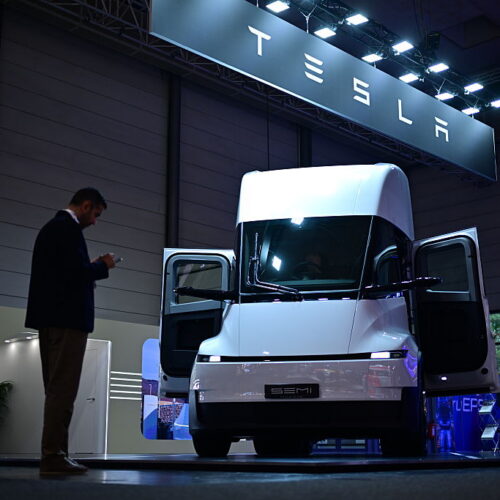
Tesla officially launched high-volume production of its long-awaited electric Semi truck on Thursday at its factory in Sparks, Nevada. The event, which was livestreamed and invite-only, marked a significant step for the company's foray into the heavy-duty electric vehicle market. Tesla CEO Elon Musk, who has increasingly positioned the company as a robotics and autonomous vehicle firm with aspirations for a $20 trillion valuation, was not present at the launch, reportedly attending a White House China State Dinner. Musk previously stated his vision for Tesla to be valued at $20 trillion, a figure significantly higher than Nvidia's current market capitalization, based on its advancements in robotics and autonomous driving technology. The Tesla Semi concept was first unveiled in late 2017, with nearly a decade passing before the commencement of high-volume production. The target audience for the Semi is fleet operators who are cost-conscious and manage large trucking fleets. Several fleet managers who have placed orders for the Semi were acknowledged during the event. Musk described the Semi in a pre-taped video as "a driver's truck," likening it to "a sports car in truck form." The launch of the Semi addresses a key segment of the transportation industry, aiming to provide a more sustainable and potentially cost-effective alternative to traditional diesel-powered trucks. The success of the Semi will depend on its ability to meet the demanding operational requirements of long-haul trucking, including range, charging infrastructure, and total cost of ownership for fleet operators. The company's focus on electric vehicles, alongside its ambitions in robotics and artificial intelligence, underscores its broader strategy to transform multiple sectors of the economy. The Semi's introduction is a critical development in Tesla's diversification beyond passenger electric cars and into commercial transportation, a market with substantial potential for electrification. The company's ability to scale production and establish a robust charging and service network for the Semi will be crucial for its widespread adoption by trucking companies. This move also places Tesla in direct competition with established truck manufacturers who are also developing their own electric and alternative fuel heavy-duty vehicles. The long lead time from concept to production highlights the complexities of developing and manufacturing large-scale commercial vehicles, particularly those incorporating advanced electric powertrain technology. Tesla's commitment to this segment signals a belief in the viability and future demand for electric heavy-duty transport solutions.
Original source — read the full reporting at the publisher:
Read on Ars TechnicaGet the weekly AI digest
AI news + new model releases, weekly. Drafted by our agents, reviewed by humans.