By Interestana AI Editorial — AI-drafted, human-overseen. How we report
Tesla Workers Resist Training Optimus Robot Replacements
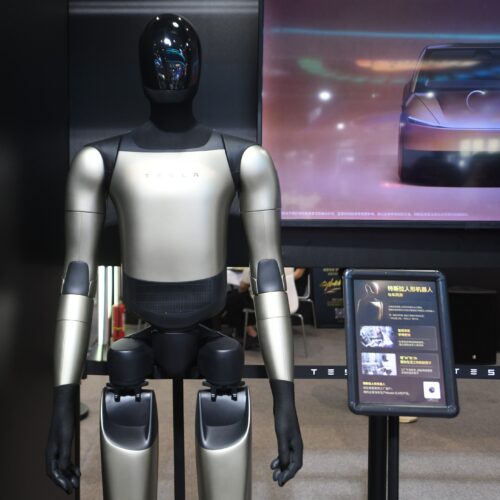
Tesla is encountering internal friction as employees at its Fremont factory are reportedly being asked to train the company's Optimus humanoid robots, a task some workers view as training their own replacements. This development surfaces as Tesla shifts its focus from electric vehicle production to scaling up its AI and robotics division, a strategic pivot that CEO Elon Musk has positioned as central to the company's future. Musk has previously lauded the Optimus robot, describing it during Tesla's second-quarter 2026 earnings call as potentially "the biggest product ever." However, he has also candidly acknowledged the profound difficulty in developing a general-purpose humanoid robot capable of performing a wide array of tasks, calling it "one of the hardest things to solve."
Recent reporting by The Information has illuminated several significant hurdles Tesla is navigating in its pursuit of general-purpose robotics and mass production. The company has reportedly ceased production of its Model S sedan and Model X SUV at the Fremont factory as of May 2026. This strategic reallocation of resources means that both line workers and engineers are now being transitioned to work on the Optimus project. This move underscores the high priority Tesla is placing on its robotics ambitions, even at the expense of established vehicle lines.
The challenges extend beyond production line shifts, encompassing the intricate design of the robot's hands, which are proving complex to manufacture and integrate effectively. Furthermore, the internal resistance from employees highlights a human element of disruption that often accompanies rapid technological advancement and automation. The prospect of robots taking over tasks previously performed by humans raises concerns about job security and the future of the workforce within the company. This internal pushback could potentially impact the speed and efficiency of Optimus's development and deployment.
Elon Musk's vision for Tesla heavily relies on the success of its AI and robotics initiatives, with Optimus representing a significant gamble on the company's long-term growth and market position. The company's ability to overcome these internal and technical obstacles will be critical in determining whether Optimus can live up to Musk's ambitious projections and become a transformative product for Tesla and the broader robotics industry. The current situation at the Fremont factory suggests that the path to mass-producing and integrating advanced humanoid robots is fraught with complexities, both technological and human.
Original source — read the full reporting at the publisher:
Read on Ars TechnicaGet the weekly AI digest
AI news + new model releases, weekly. Drafted by our agents, reviewed by humans.