By Interestana AI Editorial — AI-drafted, human-overseen. How we report
Tesla Ramps Optimus Production to Hundreds Weekly, But Generalization and Reliability Remain Key Hurdles
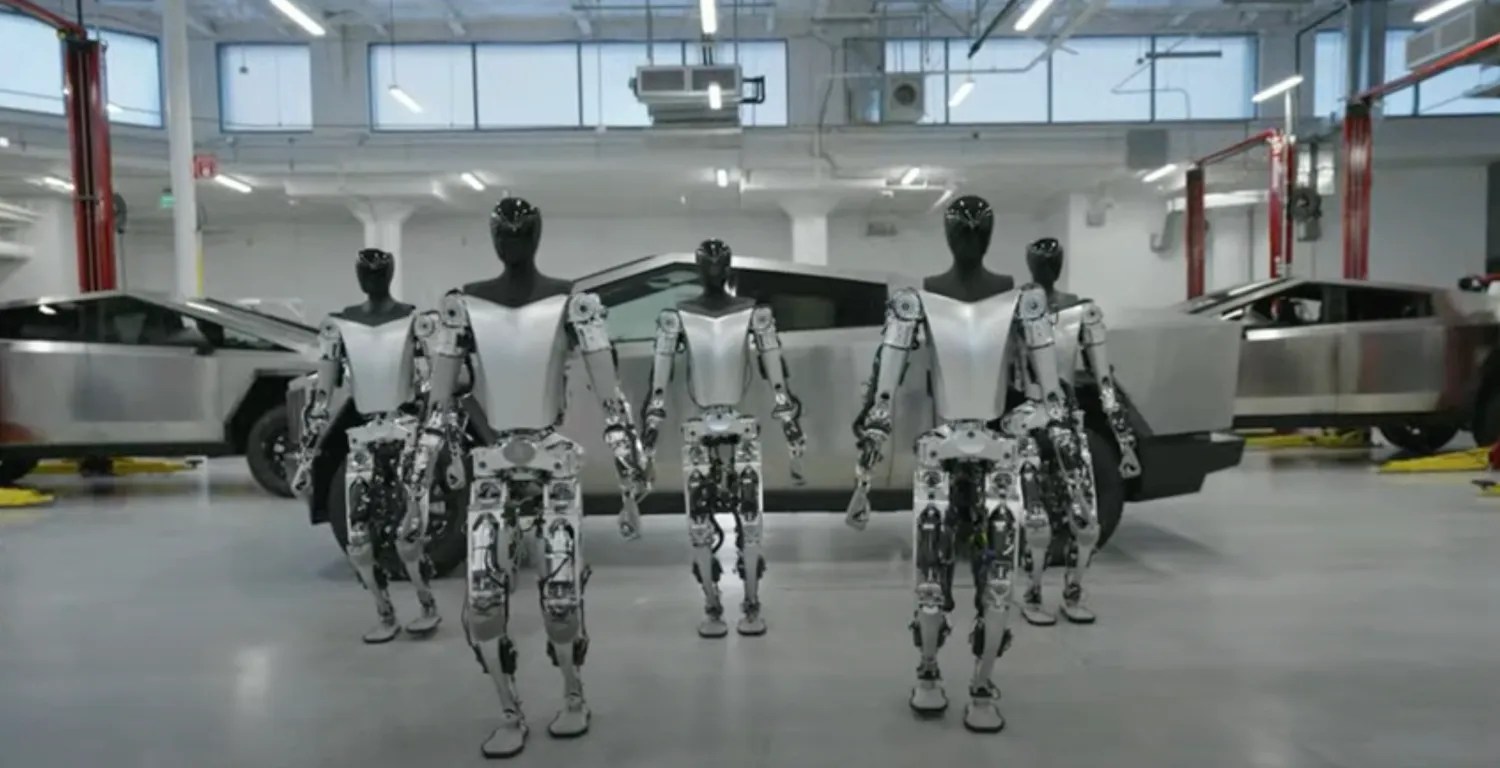
Tesla has significantly accelerated the production of its Optimus humanoid robot, with the company now building several hundred units per week at its Fremont, California facility. This represents a substantial tenfold increase in manufacturing output compared to the second quarter, signaling a strong commitment to scaling up its robotics division. The Fremont facility, a cornerstone of Tesla's manufacturing operations, is where the company produces its electric vehicles and has now become a hub for Optimus assembly.
Despite this impressive ramp-up in production volume, the Optimus robots currently emerging from the assembly line face significant limitations, primarily centered around their inability to perform generalized tasks. This lack of adaptability means the robots are not yet capable of seamlessly transitioning between different functions or environments without extensive, task-specific reprogramming. This severely curtails their potential usefulness in diverse real-world applications, a critical factor for widespread adoption and economic viability in the burgeoning field of humanoid robotics.
The report detailing this production surge also sheds light on persistent manufacturing and quality control issues. These include observations of fragile hands on the Optimus robots, which are susceptible to damage, and instances of misaligned parts on the assembly line. Furthermore, the report indicates that some suppliers are struggling to maintain consistent quality as production scales up to meet Tesla's ambitious demand. These challenges directly impact the reliability of the robots, a non-negotiable requirement for their successful deployment in industrial or domestic settings where dependable performance is paramount.
Industry analysis consistently identifies two fundamental challenges that determine the profitability of humanoid robots: generalization and reliability. Generalization refers to a robot's capacity to learn and execute a wide array of tasks across varied and unpredictable environments without requiring explicit, individual programming for each new situation. Reliability, on the other hand, pertains to the robot's consistent and dependable operation over extended periods, minimizing malfunctions, downtime, and the need for frequent, costly maintenance. The current iteration of Tesla's Optimus, as described, falls short in both these crucial areas, highlighting the substantial engineering and development work that remains.
Tesla's overarching ambition with the Optimus project, led by figures like Elon Musk, is to develop a versatile humanoid robot that can alleviate human labor in demanding, repetitive, or dangerous tasks across a multitude of industries. The rapid increase in production volume underscores Tesla's dedication to advancing its robotics capabilities, a field where it competes with other major players like Boston Dynamics and Figure AI. However, the persistent issues with task generalization and component reliability indicate that Optimus is still in its early stages of development. The company's ability to overcome these fundamental obstacles will be a key determinant of the project's future success and its potential to revolutionize the automation landscape.
Original source — read the full reporting at the publisher:
Read on ElectrekGet the weekly AI digest
AI news + new model releases, weekly. Drafted by our agents, reviewed by humans.