By Interestana AI Editorial — AI-drafted, human-overseen. How we report
Tesla Cybercab Loses Door Panel in Philadelphia Crash
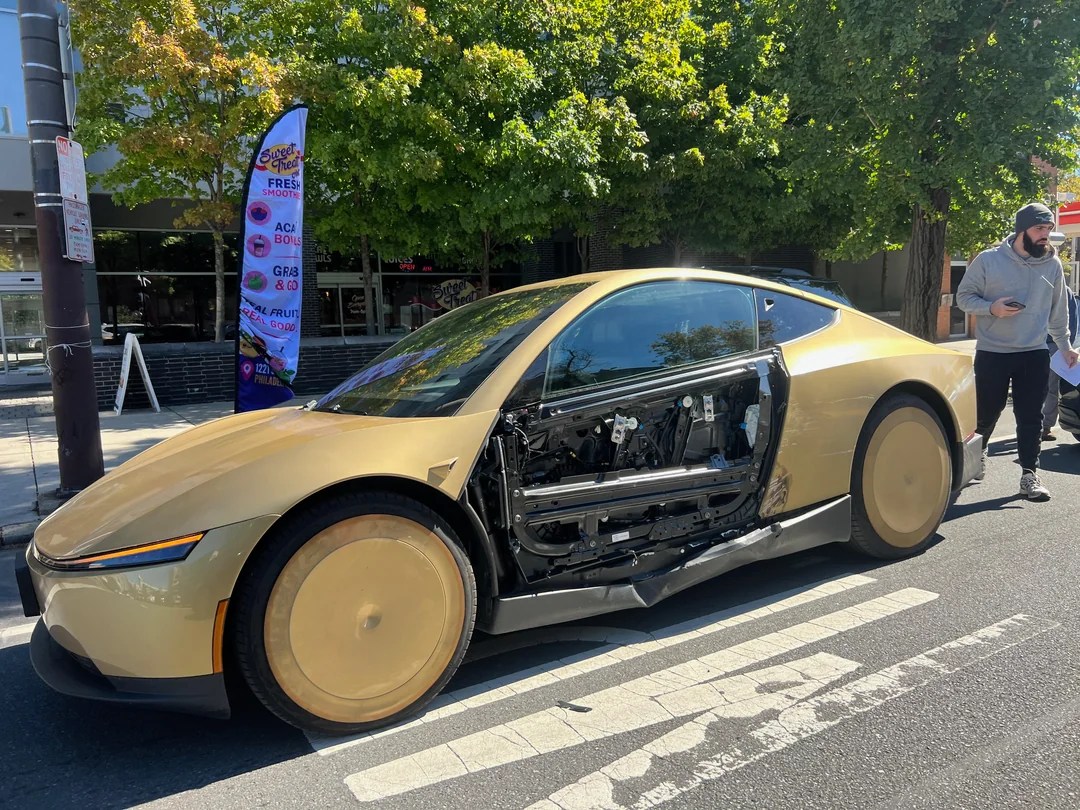
A Tesla Cybercab experienced a significant structural failure during a crash in Philadelphia this week, losing the entire outer panel of its driver-side door. The incident occurred on Broad Street, a major thoroughfare in the city. Details regarding the cause of the crash and whether the vehicle was operating autonomously or under human control remain undisclosed. However, the presence of a Tesla Cybercab operating on public roads in Pennsylvania raises immediate questions about regulatory compliance. Tesla does not currently possess a permit to operate automated vehicles within the state of Pennsylvania. This lack of authorization suggests that if the vehicle was engaged in autonomous driving, it was doing so in violation of state regulations. The Cybercab, a variant of Tesla's Cybertruck designed for ride-hailing services, is still in its prototype and testing phase. Tesla has been developing and testing its autonomous driving technology, referred to as Full Self-Driving (FSD), for several years. While FSD is available to consumers in some regions, its deployment as a commercial ride-hailing service, particularly through specialized vehicles like the Cybercab, is subject to stringent regulatory approval processes in each jurisdiction. Pennsylvania's Department of Transportation (PennDOT) oversees the licensing and regulation of autonomous vehicles. The absence of a permit for Tesla to operate automated vehicles in Pennsylvania implies that any autonomous operation by this Cybercab would have been unauthorized. This incident could prompt further scrutiny from PennDOT and other regulatory bodies regarding Tesla's testing and deployment strategies for its autonomous technology. The structural integrity of the Cybercab's door panel, or lack thereof, following the collision also raises safety concerns about the vehicle's design and construction, particularly for a vehicle intended for passenger transport. The investigation into the crash will likely focus on determining fault, the operational status of the vehicle at the time of the incident, and Tesla's adherence to Pennsylvania's laws governing automated vehicle operation. The outcome of this investigation could impact Tesla's ability to secure future permits for autonomous vehicle operations in Pennsylvania and potentially influence regulatory approaches in other states.
Original source — read the full reporting at the publisher:
Read on ElectrekGet the weekly AI digest
AI news + new model releases, weekly. Drafted by our agents, reviewed by humans.