By Interestana AI Editorial — AI-drafted, human-overseen. How we report
Musk, Sanders Debate Billionaire Taxes Amid $40 Trillion Debt
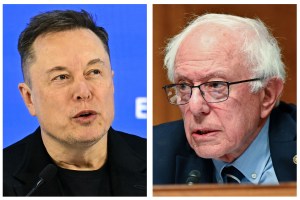
Elon Musk stated on X in 2023 that taxing every billionaire in America at 100% would "barely make a dent" in the national debt, which had reached $40 trillion. Musk believes that ultimately, the government would be compelled to tax all citizens to manage the debt. This perspective contrasts with that of Senator Bernie Sanders (I-Vt.) and Representative Ro Khanna (D-Calif.), who have proposed a wealth tax on billionaires. Sanders and Khanna introduced the "Make Billionaires Pay Their Fair Share Act" earlier this year, suggesting there are 938 billionaires in the United States with a combined net worth of $8.2 trillion. Their proposed legislation calls for an annual 5% wealth tax on individuals possessing a net worth of $1 billion or more. Sanders estimates this bill could generate $4.4 trillion over its initial ten-year period. In the first year of implementation, the revenue generated would be used to provide a one-time $3,000 check to Americans in lower- or middle-income households, defined as those earning $150,000 or less annually. This revenue is also intended to offset potential cuts to federal health programs and fund essential social services. The differing viewpoints highlight a broader debate on wealth inequality, taxation strategies, and the allocation of public funds. Musk's assertion emphasizes the sheer scale of the national debt, suggesting that even extreme measures targeting the wealthiest individuals would be insufficient to address it. Conversely, Sanders and Khanna's proposal focuses on redistributing wealth and providing direct financial relief to a significant portion of the population, while also bolstering social safety nets. The $8.2 trillion held by the 938 billionaires, as cited by Sanders and Khanna, represents approximately 20.5% of the $40 trillion national debt. This mathematical comparison underscores the core of Musk's argument regarding the inadequacy of such a tax for debt reduction. However, Sanders' plan prioritizes social spending and direct citizen benefits over complete debt elimination, framing the tax as a means to achieve these specific objectives. The debate involves not only the mechanics of taxation but also the fundamental purpose of such policies: whether they should primarily aim for fiscal solvency or for social equity and economic stimulus through wealth redistribution.
Original source — read the full reporting at the publisher:
Read on FortuneGet the weekly AI digest
AI news + new model releases, weekly. Drafted by our agents, reviewed by humans.