By Interestana AI Editorial — AI-drafted, human-overseen. How we report
Trump Dividend Funding Unlikely From Taxes, Says Commerce Secretary
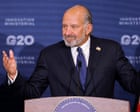
US Commerce Secretary Howard Lutnick stated that Donald Trump's proposal to provide a $5,000 "dividend" to all US adults, contingent on Republicans maintaining control of Congress in the November elections, would not be funded through US tax revenues. Lutnick clarified in an interview with NBC News that the administration aims to generate the funds for these payments without increasing the deficit or drawing from taxpayers. He suggested that a new visa program could be a source for generating the estimated $1 trillion needed to fulfill Trump's plan, with $500 billion potentially coming from this initiative.
This statement addresses a key point of contention surrounding Trump's economic proposal, which has drawn scrutiny regarding its fiscal feasibility. The plan, if enacted, would represent a significant distribution of funds to the entire adult population, raising questions about the source of such substantial capital. Lutnick's assertion that the funding would not originate from existing tax streams or further national debt is a critical distinction for understanding the proposed policy's financial underpinnings. The mention of a visa program as a potential revenue stream indicates a focus on economic mechanisms that could generate new income for the government, rather than reallocating existing funds or increasing the tax burden on citizens.
The proposed "dividend" is a central element of Trump's economic platform for the upcoming midterm elections, where Republicans are seeking to retain their majorities in both the House of Representatives and the Senate. The success of this proposal, therefore, is directly linked to the electoral outcomes. Lutnick's comments, made in his capacity as Commerce Secretary, carry significant weight in interpreting the administration's approach to such ambitious fiscal policies. The figure of $1 trillion represents the total estimated cost for distributing $5,000 to every adult American, a substantial undertaking that requires a clear and sustainable funding strategy. The suggestion that $500 billion could be sourced from a visa program highlights a specific, albeit preliminary, financial pathway being considered by the administration.
Lutnick's remarks underscore the administration's effort to present the dividend as a self-sustaining economic initiative, rather than a direct expenditure from the federal budget that would necessitate tax increases or deficit spending. The economic implications of such a large-scale distribution are multifaceted, potentially impacting consumer spending, inflation, and overall economic activity. The specific details of the proposed visa program and its projected revenue generation remain to be fully elaborated, but its identification as a primary funding source signals a particular direction for policy development. The context of the upcoming midterm elections adds a layer of political urgency to these financial discussions, as economic promises often play a crucial role in voter decision-making.
Original source — read the full reporting at the publisher:
Read on The Guardian WorldGet the weekly AI digest
AI news + new model releases, weekly. Drafted by our agents, reviewed by humans.