By Interestana AI Editorial — AI-drafted, human-overseen. How we report
Sweden's Centre-Right Prime Minister Resigns Following Slim Centre-Left Election Victory
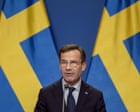
Ulf Kristersson, the outgoing centre-right Prime Minister of Sweden, has formally resigned from his position. This move is a direct consequence of the recent general election, where the centre-left bloc, led by the Social Democrats, managed to secure a slim but decisive majority. Kristersson's resignation clears the path for Magdalena Andersson, the leader of the Social Democrats, to undertake the complex task of forming a new government. Andersson, in her victory speech delivered on Thursday, articulated the sentiment of the Swedish electorate, stating that the people had "voted for a new direction for our country, voted for unity and against division." This electoral outcome signifies a clear mandate from the Swedish populace for a shift in political leadership and policy orientation. The Social Democrats, a historically significant and influential party in Swedish politics, are now positioned to regain a leading role in governance after a period of centre-right administration. Kristersson's tenure as Prime Minister, which began in October 2022, was marked by efforts to form a coalition government following a previous election. His resignation underscores the fragility of the centre-right's parliamentary support and the electorate's desire for change. The formation of a new government under Andersson's leadership will inevitably involve intricate coalition negotiations with various political parties. The narrowness of the centre-left's majority suggests that consensus-building and compromise will be paramount for the effective functioning of the incoming administration. This election result is being closely observed both within Sweden and on the international stage, as it will undoubtedly shape the nation's future policy agenda across critical domains including economic strategy, social welfare programs, and its foreign policy stance. The Social Democrats, founded in 1889, have a long legacy of shaping Sweden's welfare state and its commitment to multilateralism. Their return to power, albeit with a slender majority, indicates a public desire to reinforce these established principles. The precise composition of Andersson's cabinet and the specific policy priorities she will champion will become clearer in the coming days and weeks as these crucial coalition talks unfold. The transition of power is expected to proceed smoothly, reflecting Sweden's robust democratic traditions and its commitment to peaceful political change. The election campaign itself was characterized by vigorous debates on pressing national issues, and the voters' decision represents a direct reflection of their priorities and aspirations for Sweden's future.
Original source — read the full reporting at the publisher:
Read on The Guardian WorldGet the weekly AI digest
AI news + new model releases, weekly. Drafted by our agents, reviewed by humans.