By Interestana AI Editorial — AI-drafted, human-overseen. How we report
Tim Cook Led Apple to $5 Trillion Valuation
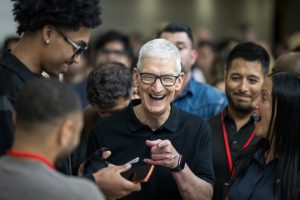
Tim Cook officially succeeded Steve Jobs as Apple CEO on September 1, 2023, stepping down from the role he held since 2011. When Cook took the helm, many commentators questioned his ability to fill the visionary shoes of Jobs, who was renowned for his instinct in creating groundbreaking products like the Mac, iPod, and iPhone. At the time, CNET editor Molly Wood reflected a common sentiment, writing that Cook did not possess the "maniacal dedication" of Jobs and might struggle to oversee the creation of "society-changing devices." These early observations proved largely accurate; under Cook's leadership, Apple did not introduce a new world-altering device, and the company experienced some product missteps.
However, the narrative surrounding Cook's tenure has shifted significantly. Rather than needing another Jobs-like visionary, Apple at that stage of its lifecycle required a leader capable of building a sustainable business around its existing successful products and proving the company's viability beyond its charismatic founder. Tim Cook's legacy is built on this very need. Jo-Ellen Pozner, a business professor at Santa Clara University, noted that Cook's understated approach allowed him to exceed expectations. She argues that Cook's greatest achievement was transitioning Apple from a company defined by Jobs' "cult of personality" to one grounded in its core values and centered on its customers, rather than the CEO. This strategic shift fostered a more stable and enduring business model.
Cook, who was hired by Jobs in 1998 and later promoted to executive vice president of worldwide operations, brought a different skill set to the CEO position. His focus on operational efficiency and supply chain management, areas where he excelled, allowed Apple to scale its production and distribution effectively. This operational prowess was crucial in managing the immense global demand for Apple's products. While Jobs was the product visionary, Cook became the operational architect, ensuring that Apple's innovative products could be manufactured and delivered to millions of consumers worldwide. This dual approach, combining visionary product development with robust operational execution, was instrumental in Apple's unprecedented financial growth.
Under Cook's leadership, Apple's market capitalization soared, reaching milestones such as becoming the first company to achieve a $3 trillion valuation in early 2022 and subsequently surpassing $5 trillion. This financial success underscores Cook's ability to manage and grow a complex global enterprise. His tenure demonstrates that leadership styles can evolve, and that a company's success can be driven by different strengths at different stages of its development. Cook's quiet competence and strategic focus on customer value and operational excellence have cemented his legacy as a transformative leader who guided Apple through a new era of sustained growth and market dominance, proving that a company can thrive without replicating its founder's unique persona.
Original source — read the full reporting at the publisher:
Read on FortuneGet the weekly AI digest
AI news + new model releases, weekly. Drafted by our agents, reviewed by humans.