By Interestana AI Editorial — AI-drafted, human-overseen. How we report
SpaceX Launches Crew Mission After Valve Repair
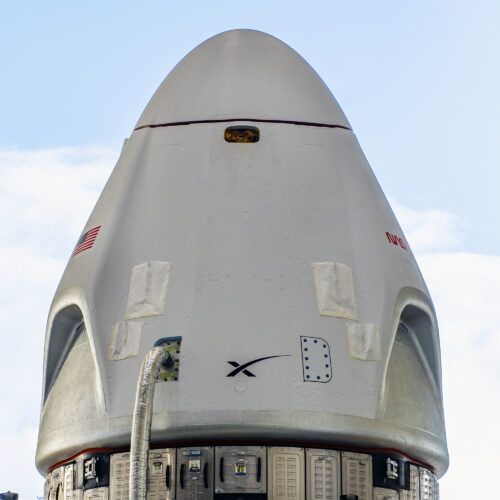
SpaceX successfully launched a four-person crew into orbit on Thursday, commencing a six-month expedition aboard the International Space Station (ISS). The launch, which took place from Space Launch Complex-40 at Cape Canaveral Space Force Station in Florida, utilized a Falcon 9 rocket and a Dragon spacecraft. The crew departed at 11:10 am EDT (15:10 UTC) and successfully reached orbit nine minutes later, proceeding to dock with the ISS on Thursday evening. This mission's launch was originally scheduled for mid-September but was postponed to address a malfunctioning valve within the Dragon spacecraft's propulsion system. The repair process was described as a "surgical intervention" by SpaceX, involving the precise cutting into a propellant line inside the spacecraft to facilitate the replacement of the faulty component. This detailed intervention highlights the meticulous engineering and safety protocols undertaken by SpaceX to ensure mission success and crew safety. The Falcon 9 rocket, a workhorse of SpaceX's launch fleet, is designed for reusability, contributing to the company's cost-efficiency in spaceflight operations. The Dragon spacecraft, specifically the Crew Dragon variant, is engineered to transport astronauts to and from the ISS, adhering to stringent safety standards set by NASA and other space agencies. The ISS itself is a modular space station in low Earth orbit, serving as a microgravity research laboratory and a testament to international cooperation in space exploration. The six-month duration of the expedition allows for extensive scientific research and operational tasks to be conducted by the crew. The successful replacement of the valve underscores SpaceX's capability to perform complex in-situ repairs, a critical skill for long-duration space missions. The company's commitment to iterative design and rapid problem-solving has been a hallmark of its operations since its inception. This mission continues SpaceX's streak of successful crewed launches, reinforcing its position as a leading private spaceflight provider. The ability to diagnose and rectify technical issues, even those requiring invasive procedures on critical systems like propellant lines, is vital for maintaining operational tempo and achieving ambitious space exploration goals. The delay, though impacting the original schedule, ultimately ensured the integrity of the spacecraft's propulsion system, a non-negotiable aspect for safe transit and orbital maneuvers. The successful completion of the launch and subsequent orbital insertion demonstrates the effectiveness of the repair and the readiness of the crew and spacecraft for their mission.
Original source — read the full reporting at the publisher:
Read on Ars TechnicaGet the weekly AI digest
AI news + new model releases, weekly. Drafted by our agents, reviewed by humans.