By Interestana AI Editorial — AI-drafted, human-overseen. How we report
South Korea Shortens Joint Military Drills with U.S. Following Washington's Request
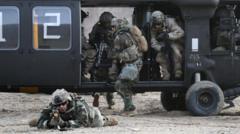
South Korea has announced a reduction in the duration of its joint military exercises with the United States. This adjustment follows a specific request originating from Washington. The decision is directly linked to statements made by former U.S. President Donald Trump, who had previously indicated his intention to curtail these joint military drills. Trump's rationale for this proposed reduction was attributed to his "very good" relationship with North Korean leader Kim Jong Un, suggesting a diplomatic overture towards Pyongyang. While the precise extent of the shortening and the exact timeline of Washington's request were not detailed in the initial reports, the context clearly points to a potential recalibration of the U.S. military posture on the Korean Peninsula. This shift appears to be influenced by diplomatic considerations and a broader U.S. strategy aimed at de-escalating tensions with North Korea.
Joint military exercises between the U.S. and South Korea are a cornerstone of their mutual defense treaty, established to bolster military readiness and serve as a deterrent against potential aggression from North Korea. These exercises typically encompass a wide spectrum of military operations, including simulated combat scenarios, sophisticated air and naval maneuvers, and the deployment of ground troops. Historically, the scale and frequency of these drills have been a consistent point of contention for North Korea, which has frequently characterized them as provocative and a direct threat to its security.
South Korea's acquiescence to shorten these exercises, at the behest of the United States, signifies a notable adaptation of security priorities. It indicates a willingness to modify military readiness in response to evolving geopolitical dynamics and diplomatic imperatives. The implications of this reduction for regional security architecture and the effectiveness of deterrence capabilities are expected to be closely scrutinized by North Korea, as well as by other key regional players such as China and Japan. The U.S. military presence in South Korea is a critical component of its broader Indo-Pacific strategy, and any modifications to joint exercises could have far-reaching strategic ramifications. The specific nature of the "request" from Washington, beyond the publicly stated rationale concerning the relationship with North Korea, remains an area requiring further clarification. This development underscores the intricate interplay between military preparedness, diplomatic engagement, and political considerations that shape the management of inter-Korean relations and the broader security landscape of East Asia.
Original source — read the full reporting at the publisher:
Read on BBC World NewsGet the weekly AI digest
AI news + new model releases, weekly. Drafted by our agents, reviewed by humans.