By Interestana AI Editorial — AI-drafted, human-overseen. How we report
Solar Eclipse Overshadows Sporting Events Across UK and Europe
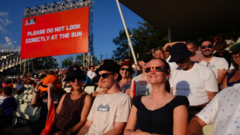
A significant solar eclipse, the most substantial to be visible across the UK and Europe since 1999, occurred on Wednesday, drawing widespread public attention and inadvertently overshadowing scheduled sporting events. The celestial phenomenon, characterized by the Moon passing between the Sun and Earth, caused a temporary dimming of daylight across a broad geographical area, prompting many to pause and observe the rare occurrence. This collective focus on the eclipse meant that sporting fixtures, which typically command significant media coverage and public engagement, received comparatively less attention on the day of the event. The eclipse's path of totality, where the Sun is completely obscured, traversed various regions, while partial phases were visible across the entire UK and much of Europe. This widespread visibility ensured that the event was a shared experience for millions, influencing daily routines and media consumption patterns. The timing of the eclipse, occurring during daylight hours, made its impact on typical daily activities, including sports viewership and reporting, more pronounced. While specific sporting events were not detailed in the provided information, the general observation is that the eclipse served as a major distraction, diverting public and media focus from the usual sporting narratives. The rarity of such an event, with the last comparable eclipse in 1999, contributed to its significant impact. The 1999 solar eclipse was also a major event, visible across Europe and parts of Asia, and generated considerable public interest and media coverage at the time. The current eclipse's visibility across densely populated areas of the UK and Europe amplified its potential to disrupt normal activity. The visual spectacle of a solar eclipse, particularly one of this magnitude, often leads to a natural pause in other activities as people gather to witness it. This can range from impromptu gatherings in public spaces to individuals stepping away from their work or leisure activities to observe the phenomenon. The effect on sporting events is a direct consequence of this shift in public and media focus. Instead of headlines dominated by match results, team news, or athlete performances, the primary narrative of the day was the solar eclipse. This phenomenon underscores the power of natural events to capture collective imagination and temporarily alter the landscape of public interest, even in a world saturated with constant information and entertainment. The eclipse served as a reminder of the natural world's ability to command attention on a scale that often surpasses human-made events, including major sporting competitions. The visual impact of the eclipse, with the sun appearing to be partially or fully covered by the moon, is a powerful and memorable experience for those who witness it. This shared experience can foster a sense of community and collective awe, further contributing to its ability to dominate public discourse for the day. The subsequent reduction in focus on sporting events is a direct consequence of this heightened public engagement with the astronomical event. The eclipse's path and duration would have influenced the extent to which different sporting events were affected, with those occurring during the peak visibility times likely experiencing the most significant distraction. The information provided focuses on the general impact rather than specific instances, highlighting the overarching effect of the eclipse on the day's news cycle and public attention.
Original source — read the full reporting at the publisher:
Read on BBC SportGet the weekly AI digest
AI news + new model releases, weekly. Drafted by our agents, reviewed by humans.