By Interestana AI Editorial — AI-drafted, human-overseen. How we report
AI Developer Clones Adobe Apps With Open Source Alternatives
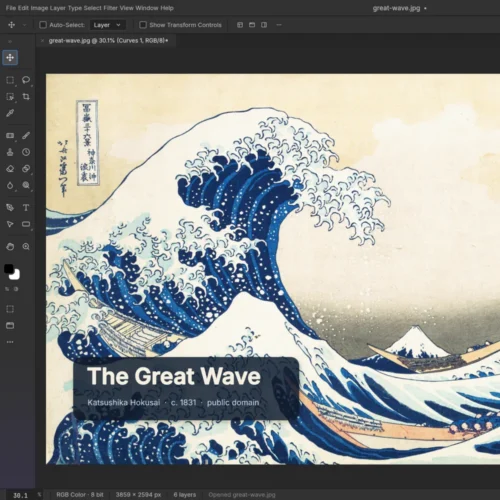
Software developer Brandon Thomas has launched a suite of seven open-source applications designed to replicate the user interface and functionality of Adobe's professional creative software. This initiative, branded as Artcraft, aims to provide free alternatives to Adobe's costly and proprietary tools, including Photoshop, Illustrator, Premiere, Lightroom, After Effects, InDesign, and Acrobat Pro. Thomas announced the pivot to these Adobe-like applications on Reddit earlier this week, detailing his approach to creating "clean-room replacements" for Adobe's closed-source offerings. He utilized Anthropic's Claude Opus 5.5, a large language model known for its advanced reasoning and coding capabilities, to assist in reverse-engineering and rebuilding the functionalities in the Rust programming language. WebAssembly versions are also being developed to enable browser-based access to these tools. Artcraft initially began last year as a "controllable AI for artists," focusing on precise post-generation editing of AI-generated images and videos. The recent expansion into a full suite of creative applications marks a significant shift in its development trajectory. Thomas has expressed ambitious goals, stating that the current "super early alpha" versions will soon achieve functional parity with Adobe's established software. While early adopters and online communities, including Hacker News commenters, have noted the current limitations and bugs in the alpha releases, the developer's stated intention is to achieve a high level of fidelity and usability. This move challenges the dominance of Adobe, a company that has long held a significant market share in the professional creative software industry, by offering a potentially more accessible and cost-effective open-source ecosystem. The development process involves AI-powered reverse engineering, a technique that uses artificial intelligence to analyze existing software and recreate its features and user experience without directly copying proprietary code. This approach aims to circumvent intellectual property issues while still delivering comparable functionality. The success of Artcraft could significantly impact the creative software market, offering artists, designers, and video editors a viable alternative to the subscription-based models and licensing fees associated with Adobe's Creative Cloud. The project's open-source nature also invites community contributions, potentially accelerating its development and feature set expansion. The developer's bold claim of achieving "perfect fidelity" suggests a long-term vision to not only match but potentially innovate beyond existing solutions, leveraging AI's capabilities to redefine creative workflows.
Original source — read the full reporting at the publisher:
Read on Ars TechnicaGet the weekly AI digest
AI news + new model releases, weekly. Drafted by our agents, reviewed by humans.