By Interestana AI Editorial — AI-drafted, human-overseen. How we report
Undersea Volcanoes Pose Outsized Tsunami Risk
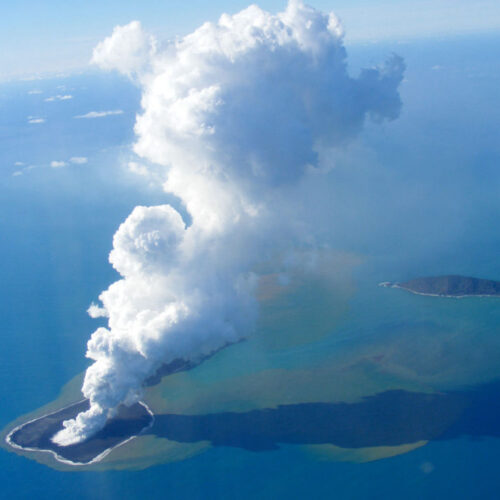
Volcanic activity occurring beneath the ocean's surface can generate tsunamis with devastating consequences, a risk that scientists are working to better understand. The catastrophic 1883 eruption of Krakatau in Indonesia, which resulted in over 30,000 fatalities, was largely driven by a tsunami caused by the volcanic event, rather than solely by volcanic debris. The interaction between volcanic processes and seawater plays a critical role in determining the hazard level of submarine eruptions. In the deep ocean, the immense water pressure can inhibit explosive volcanic activity, thereby mitigating destructive potential. However, as volcanic activity approaches the surface, the reduced water pressure combined with the high temperatures of volcanic materials can lead to violent, explosive events. Despite these observations, the precise conditions under which submarine volcanic activity can trigger a tsunami remain incompletely understood.
To address this knowledge gap, an international team of researchers focused their investigation on the 2022 Hunga Tonga-Hunga Ha'apai eruption. Their primary objective was to analyze the rapid caldera collapse that occurred during the event, which is believed to have significantly amplified the resulting tsunami's power. A caldera is a large cauldron-like depression that forms when the ground above a magma reservoir collapses due to the draining of magma. The research team meticulously compared seafloor topography data collected before and after the eruption. These comparisons revealed a substantial geological change: a caldera approximately four kilometers in width subsided by roughly one kilometer during the eruption sequence. This significant collapse is a key factor being studied for its role in generating the powerful tsunami waves.
The Hunga Tonga-Hunga Ha'apai eruption, which occurred on January 15, 2022, was one of the most powerful volcanic events recorded in the 21st century. The eruption sent ash plumes up to 55 kilometers into the atmosphere and generated atmospheric shockwaves that circled the globe multiple times. The tsunami waves reached heights of up to 15 meters in Tonga and were detected across the Pacific Ocean, causing damage as far away as Japan and the United States. The event provided a unique, albeit tragic, opportunity for scientists to study the dynamics of large submarine volcanic eruptions and their associated tsunami generation mechanisms. Understanding these processes is crucial for improving early warning systems and mitigating the impact of future events.
Previous research has indicated that the volume of displaced water is a primary driver of tsunami height. In the case of caldera collapse, a large volume of the seafloor rapidly subsides, displacing a significant amount of seawater. This displacement can generate powerful tsunami waves that propagate outwards. The specific geometry of the caldera, the rate of collapse, and the depth of the water are all factors that likely influence the magnitude of the tsunami. The ongoing analysis of the Hunga Tonga-Hunga Ha'apai eruption aims to quantify these relationships more precisely, providing valuable data for hazard assessments and disaster preparedness strategies related to submarine volcanism worldwide.
Original source — read the full reporting at the publisher:
Read on Ars TechnicaGet the weekly AI digest
AI news + new model releases, weekly. Drafted by our agents, reviewed by humans.