By Interestana AI Editorial — AI-drafted, human-overseen. How we report
NATO Startup Scales AI for Drone Target Identification
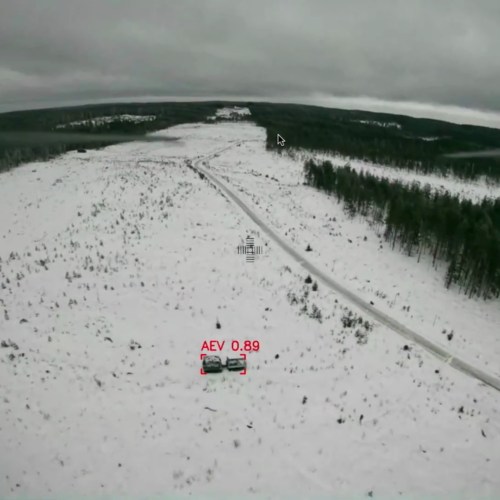
Scaleout Systems, a startup backed by NATO, is developing artificial intelligence models that enable small drones to autonomously identify and select battlefield targets for surveillance and attack missions. The company's technology is designed to operate directly on the limited hardware available in drones, a capability crucial for modern warfare where real-time decision-making is paramount. Scaleout Systems was founded in 2018 by researchers from Uppsala University in Sweden, initially focusing on deploying machine learning models within commercial trucks and other vehicles. However, the company significantly shifted its focus towards defense applications following Russia's full-scale invasion of Ukraine in 2022. This strategic pivot was driven by the realization of the technology's potential impact on operationalizing edge and sensor data for machine learning, aiming to provide NATO allies with a strategic advantage. Andreas Hellander, co-founder and CEO of Scaleout Systems, emphasized this shift in a statement, noting the importance of the technology in the context of the war in Ukraine and a changing global landscape. The company's approach involves creating compact AI models that can process sensor data and make targeting decisions without constant reliance on external networks or cloud computing. This edge AI capability is particularly valuable in contested environments where communication links may be unreliable or compromised. By enabling drones to perform autonomous target recognition and engagement, Scaleout Systems aims to enhance the efficiency and effectiveness of military operations, reduce the cognitive load on human operators, and potentially decrease collateral damage through more precise targeting. The development aligns with a broader trend in military technology towards increased autonomy and AI integration in unmanned systems. The successful deployment of such systems could significantly alter the dynamics of future conflicts, allowing for faster response times and the ability to operate in complex, data-rich environments. The company's origins in academic research and its subsequent adaptation to defense needs highlight the evolving role of AI in both civilian and military sectors, demonstrating how foundational research can be rapidly applied to address urgent real-world challenges. The focus on small, efficient AI models for edge devices is a key differentiator, addressing the inherent constraints of drone platforms.
Original source — read the full reporting at the publisher:
Read on Ars TechnicaGet the weekly AI digest
AI news + new model releases, weekly. Drafted by our agents, reviewed by humans.