By Interestana AI Editorial — AI-drafted, human-overseen. How we report
Ancient Egyptian Royal Servants May Have Been Sacrificed
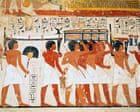
Analysis of skeletal remains from the royal cemetery at Umm el-Qa’ab, near Abydos, Egypt, indicates that court officials and craftspeople may have been ritually sacrificed upon the death of early Egyptian kings. This finding appears to corroborate a long-held theory by early Egyptologists regarding funerary practices during the First Dynasty. The cemetery at Umm el-Qa’ab contains the tombs and associated structures of Egypt's First Dynasty rulers, with archaeological evidence dating back to approximately 3,000 BC. The study focused on examining skull fractures found in several ancient remains, with the patterns of injury suggesting deliberate force rather than accidental trauma. These fractures, located in specific areas of the skull, are consistent with perimortem injuries, meaning they occurred around the time of death. The researchers meticulously documented the types of fractures, their locations, and the context in which the remains were found within the cemetery. The presence of these injuries on individuals buried within or in close proximity to the royal tombs suggests a connection to the death of the ruler. The First Dynasty of Egypt, which spanned from roughly 3100 BC to 2890 BC, was a pivotal period in the unification of Upper and Lower Egypt and the establishment of a centralized state. The rulers of this era, such as Narmer and Aha, were buried in elaborate tomb complexes at Abydos, which served as a major royal necropolis. The practice of human sacrifice in ancient societies, while abhorrent by modern standards, was not uncommon and served various purposes, including appeasing deities, ensuring the ruler's comfort in the afterlife, or demonstrating the ruler's power and authority even in death. The Umm el-Qa’ab site has yielded significant archaeological discoveries over the decades, providing invaluable insights into the political, social, and religious structures of early dynastic Egypt. The current research adds a critical layer to our understanding of these practices by providing new skeletal evidence to support existing historical and archaeological interpretations. The detailed examination of the fractures, including their morphology and distribution, was crucial in distinguishing them from post-mortem damage or natural causes. The researchers employed advanced imaging techniques and comparative analysis with known cases of ritualistic violence to strengthen their conclusions. The implications of this study extend to our understanding of social stratification and the absolute power wielded by early pharaohs, who could command the ultimate sacrifice from their closest associates. The findings contribute to a broader academic discourse on the evolution of Egyptian kingship and the development of its complex funerary rituals, which would later evolve into the pyramid-building era.
Original source — read the full reporting at the publisher:
Read on The Guardian WorldGet the weekly AI digest
AI news + new model releases, weekly. Drafted by our agents, reviewed by humans.