By Interestana AI Editorial — AI-drafted, human-overseen. How we report
Siemens CEO Roland Busch Masters Efficiency: Inbox Under 100, No Recurring Meetings with Direct Reports
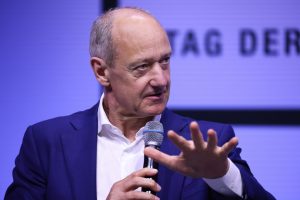
Roland Busch, the Chief Executive Officer of Siemens, a prominent German multinational conglomerate with a market capitalization of $256 billion and a ranking of 143rd on the Fortune Global 500, has adopted a highly disciplined and minimalist approach to managing his professional communications and schedule. Busch articulated his strategy in an interview with Business Insider, emphasizing his goal of consistently keeping his email inbox below 100 messages. He believes that exceeding this threshold leads to a significant loss of clarity and an inability to effectively track his current responsibilities. To achieve this level of inbox control, Busch prioritizes rapid responses to emails, often employing concise replies that are limited to just two words, such as "OK" or "No." This deliberate brevity is a core tenet of his communication style, and his team has been trained to adapt to this efficient mode of interaction. For any longer or more complex responses, Busch utilizes dictation while in transit within the Siemens offices, further streamlining the process and avoiding time-consuming typing. This unwavering commitment to efficiency is also demonstrably present in how Busch manages his interactions with his direct reports. Rather than relying on a conventional structure of recurring one-on-one meetings, Busch operates with an open-door policy. He empowers his executives to initiate contact and approach him whenever they perceive a need for his input or decision-making. Busch explained that the frequency of these impromptu meetings can fluctuate considerably, ranging from multiple times within a single week to as infrequently as once a month, underscoring his focus on substantive engagement rather than scheduled pleasantries. He explicitly stated, "I don’t need to entertain people, and they don’t need to entertain me," highlighting his preference for direct and purposeful interactions. Busch, who holds a Ph.D. in physics, joined Siemens in 1994 and embarked on a nearly three-decade journey climbing the corporate ladder before assuming the CEO position in 2021. Under his leadership, Siemens' stock value has more than doubled, solidifying its position as Germany's largest publicly-traded company and the third-largest in Europe by market capitalization. Busch attributes his distinctive leadership philosophy less to traditional business education, such as an MBA, and more to his foundational background in physics. His initial role at Siemens involved significant research into advanced energy technologies, including the development of fuel cells, which provided him with a unique analytical and problem-solving framework that he now applies to leading the vast engineering enterprise.
Original source — read the full reporting at the publisher:
Read on FortuneGet the weekly AI digest
AI news + new model releases, weekly. Drafted by our agents, reviewed by humans.