By Interestana AI Editorial — AI-drafted, human-overseen. How we report
Lucid Gravity Charges Tesla Model 3 Successfully
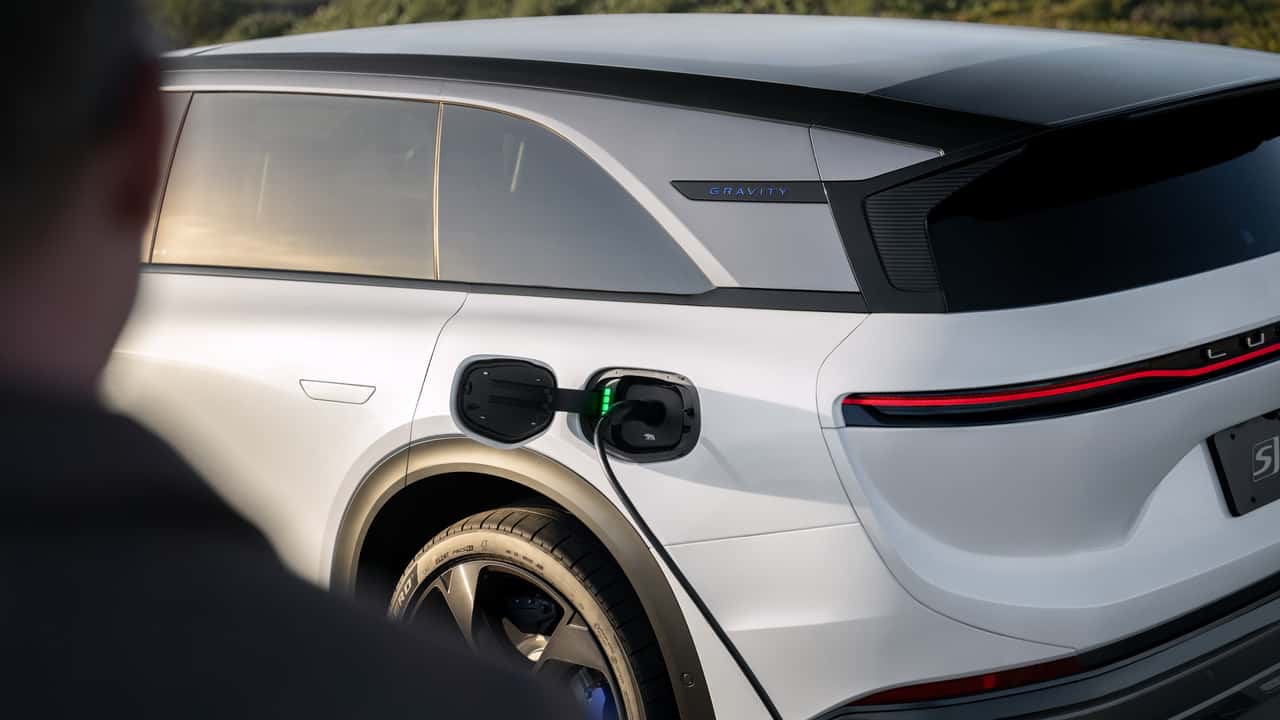
A Lucid Gravity SUV successfully charged a Tesla Model 3, demonstrating a practical application of bidirectional charging technology between vehicles from competing manufacturers. This event, captured in a video shared online, highlights the potential for interoperability in the electric vehicle (EV) market, even between brands that are typically seen as rivals. The Lucid Gravity, an upcoming electric SUV from Lucid Motors, utilized its charging port to deliver power to the Tesla Model 3, a popular EV model from Tesla. The demonstration suggests that the underlying charging standards and hardware can be compatible, allowing for energy transfer from one EV to another.
This capability, often referred to as vehicle-to-vehicle (V2V) charging or bidirectional charging, is a feature that has been discussed and developed by several automakers. For Lucid Motors, this functionality is expected to be a key selling point for its vehicles, positioning them as mobile power sources. The ability for an EV to act as a mobile power bank could be particularly useful in emergency situations, such as providing a crucial boost to a stranded vehicle or powering essential devices during a power outage. The successful charging of a Tesla, a brand known for its extensive Supercharger network and significant market share, underscores the broader implications of this technology.
While the specific technical details of the connection and the charging speed were not fully elaborated in the context of the shared footage, the visual evidence confirms the successful energy transfer. This event comes at a time when the EV industry is rapidly evolving, with a strong focus on improving charging infrastructure, battery technology, and user convenience. The development of standardized charging protocols and the increasing adoption of bidirectional charging capabilities could significantly enhance the utility and appeal of electric vehicles. It also raises questions about the future of charging ecosystems, potentially moving beyond dedicated charging stations to a more distributed and interconnected network of energy-sharing vehicles.
The implications of such interoperability extend beyond mere convenience. It could foster greater collaboration within the automotive industry and accelerate the transition to electric mobility by addressing range anxiety and providing more flexible charging solutions. As more EVs are equipped with bidirectional charging capabilities, the possibility of a vehicle-to-grid (V2G) system, where EVs can also feed power back into the electricity grid, becomes more feasible. This demonstration by the Lucid Gravity serves as a tangible example of the advanced features and potential future applications of electric vehicle technology, blurring the lines between traditional automotive competition and collaborative innovation.
Original source — read the full reporting at the publisher:
Read on InsideEVsGet the weekly AI digest
AI news + new model releases, weekly. Drafted by our agents, reviewed by humans.