By Interestana AI Editorial — AI-drafted, human-overseen. How we report
Complete Fruit Fly Brain Map Finished
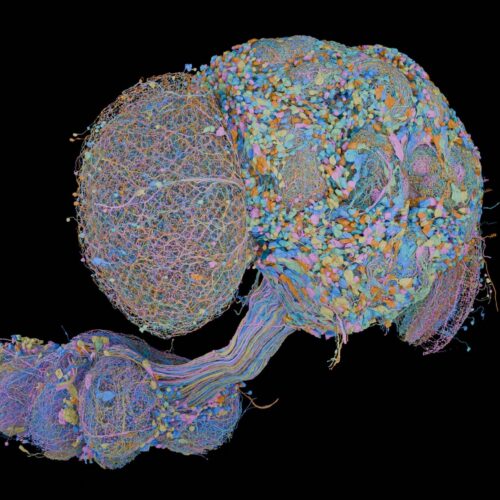
Researchers announced on Friday the completion of a comprehensive map detailing every neuron within the brain of a male fruit fly. This detailed neural map, known as a connectome, is poised to significantly accelerate neurobiology research by providing an unprecedented level of detail about neural connections. The achievement builds upon earlier work, as the connectome of a female fruit fly, Drosophila, was completed earlier this year. This new project also served as a crucial opportunity for the involved teams to refine the sophisticated tools and methodologies required for mapping neural structures. These refined techniques are anticipated to be applicable to the analysis of increasingly complex nervous systems, with potential future applications extending to vertebrates.
The ambitious undertaking was a collaborative effort, bringing together biologists from the Howard Hughes Medical Institute's Janelia Research Campus and computer scientists from Google. Both organizations acknowledged the indispensable nature of their respective contributions, highlighting that the project's success was contingent on the synergy between biological expertise and advanced computational power. The intricate process of preparing an entire fruit fly brain for imaging at the necessary resolution demands a specialized skill set, distinct from the expertise required to interpret the resulting vast datasets. Constructing a complete picture of the hundreds of millions of synapses present in a fruit fly's brain is a task of immense scale, far exceeding human capacity for completion within a manageable timeframe.
The scientists involved in this research anticipate that the long-term value of this connectome will be substantial. It is expected to serve as an invaluable resource for neurobiologists, offering a detailed blueprint to enhance their understanding of fundamental brain functions. The availability of such a precise neural map allows for more targeted investigations into how neural circuits are organized and how they give rise to behavior and cognition. The fruit fly, Drosophila melanogaster, has long been a model organism in genetic and neurobiological research due to its relatively simple nervous system and well-understood genetics, making its connectome a critical stepping stone for understanding more complex brains.
The development of advanced imaging techniques, such as serial electron microscopy, was critical to achieving the required resolution for mapping individual synapses. The computational challenges involved in processing and reconstructing these massive datasets, often terabytes in size, necessitated the development of novel algorithms and high-performance computing infrastructure. Google's contribution likely involved significant advancements in data processing, image segmentation, and neural network reconstruction. The Janelia Research Campus, a leading institution in biological imaging and neuroscience, provided the biological samples and expertise in preparing them for high-resolution imaging. This interdisciplinary approach underscores the growing trend in scientific research where breakthroughs often emerge from the convergence of different fields.
Original source — read the full reporting at the publisher:
Read on Ars TechnicaGet the weekly AI digest
AI news + new model releases, weekly. Drafted by our agents, reviewed by humans.