By Interestana AI Editorial — AI-drafted, human-overseen. How we report
Scott Bessent: 19 G20 Nations Agree to Tackle 'Cheap Imports,' China Dissents
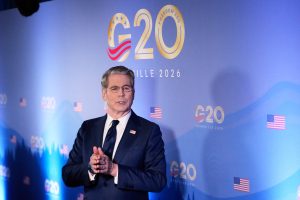
U.S. Treasury Secretary Scott Bessent announced on Tuesday that a significant consensus was reached among G20 finance ministers and central bankers, with 19 out of the 20 member nations agreeing to address the issue of "cheap exports" that contribute to global economic imbalances. Bessent specified that the People's Republic of China was the sole dissenter on this critical matter during the two-day meeting. The gathering, which included discussions on economic growth, saw Bessent advocating for some G20 counterparts to adopt strategies akin to the Trump administration's approach. This involves utilizing tariffs and other trade measures to rectify persistent trade imbalances. Bessent articulated the prevailing sentiment that the continuous export of inexpensive goods from non-market-based economies is an unsustainable economic practice. He explicitly identified China, which he characterized as the country possessing the world's largest and unsustainable current account surplus, as the dissenting nation. This perspective aligns with the long-held view of the Trump administration, echoed by many economists, that China's trade practices have been a primary driver of global trade imbalances, resulting in a substantial trade surplus for China and a significant trade deficit for the United States. The G20, an international forum for the governments and central bank governors from 19 countries and the European Union, plays a crucial role in discussing international economic and financial stability. During the closing press conference, Bessent also provided an outlook on the upcoming meeting between President Donald Trump and Chinese President Xi Jinping. He recounted warning other nations at the commencement of Trump's potential second term that a new U.S. "tariff wall" would likely result in a surge of Chinese goods entering their markets, a prediction he stated has unfortunately materialized. Bessent urged the rest of the world to critically evaluate their domestic economic policies to safeguard their citizens' jobs and manufacturing bases, thereby preventing the offshoring of vital industries. In a separate but related point, Bessent also commented on the burgeoning field of artificial intelligence, emphasizing the need for AI companies to provide clearer explanations of their operations and development processes. He indicated that discussions between President Trump and President Xi would include artificial intelligence policy, highlighting the necessity for enhanced safeguards to prevent "non-state actors" from independently developing advanced AI models. Bessent conveyed this message directly to leaders within the AI industry, stressing their responsibility to be more transparent and accountable in their technological advancements.
Original source — read the full reporting at the publisher:
Read on FortuneGet the weekly AI digest
AI news + new model releases, weekly. Drafted by our agents, reviewed by humans.