By Interestana AI Editorial — AI-drafted, human-overseen. How we report
Singapore Scientists Design World's Most Accurate Atomic Clock
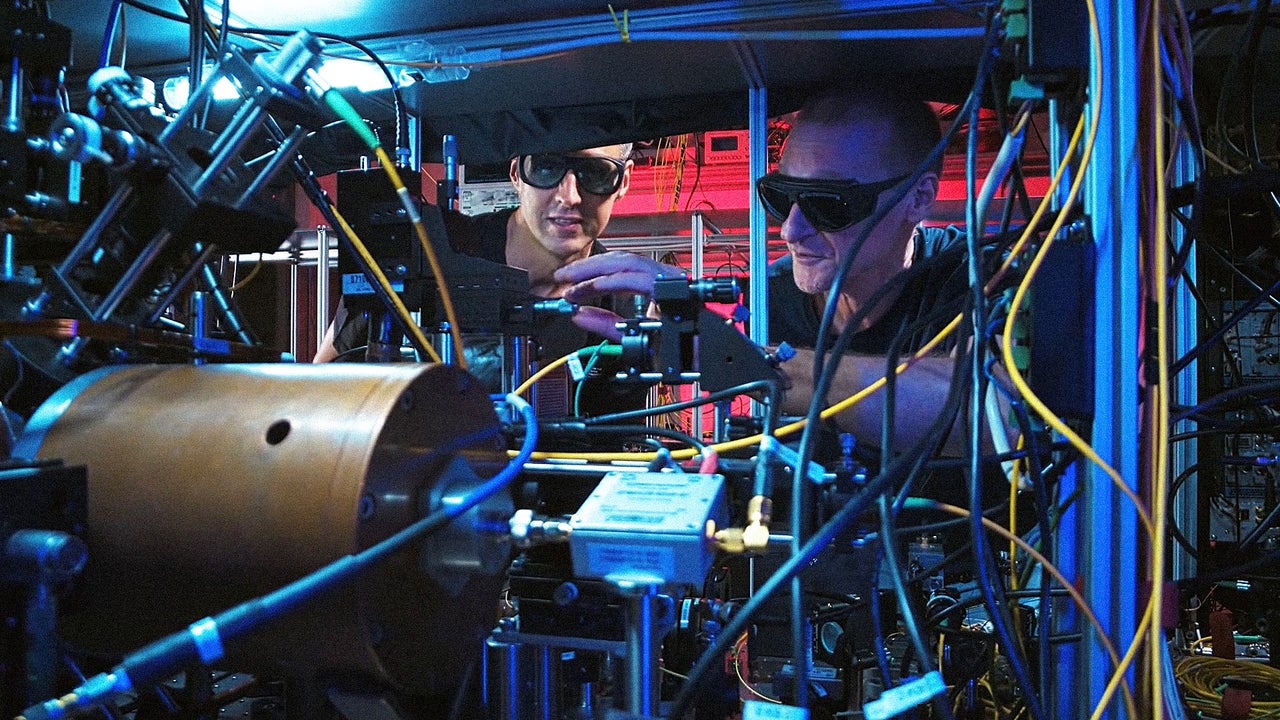
Physicists in Singapore have designed an atomic clock that measures time with unprecedented accuracy, reaching the 19th decimal place. This new clock is so precise that it could operate for hundreds of billions of years without deviating by even a single second, a duration far exceeding the current age of the universe. This achievement significantly surpasses the accuracy of existing leading atomic clocks developed by laboratories in the United States and China. Previously, the most accurate clocks utilized ions of aluminum and deep-frozen calcium, employing a scientific competition that spanned several years. Singapore's newly developed clock represents a fourfold increase in accuracy compared to these leading American and Chinese machines, establishing a new benchmark for temporal precision, as detailed in a research paper published in the journal Nature. The Centre for Quantum Technologies is associated with this development. Atomic clocks are fundamental to the functioning of modern society, providing the ultra-precise timing necessary for critical technologies. Without their accuracy, essential services such as GPS navigation would become unreliable, cellular networks like 5G would experience desynchronization, and real-time financial markets would face widespread chaos. The current international standard for timekeeping is based on cesium atomic clocks, a system established in the 1960s. The operational principle of atomic clocks involves counting the natural vibrations of light waves, analogous to a mechanical pendulum in a traditional clock. Specifically, atoms possess electrons that reside in distinct energy levels. When these atoms are exposed to electromagnetic radiation at a precise frequency, their electrons absorb energy and transition between these levels. In a conventional cesium clock, a microwave beam is meticulously tuned to the exact frequency that triggers these electron jumps. Billions of such oscillations occur every second. The clock's internal electronics then count these wave cycles, with one official second being defined as the passage of precisely 9,192,631,770 such cycles. The Singaporean team's breakthrough likely involves advancements in the method of atom trapping, laser cooling, or the detection of atomic transitions, leading to a more stable and frequent reference frequency.
Original source — read the full reporting at the publisher:
Read on Fast CompanyGet the weekly AI digest
AI news + new model releases, weekly. Drafted by our agents, reviewed by humans.