By Interestana AI Editorial — AI-drafted, human-overseen. How we report
Russia Faces Slow-Motion Bank Run Amid War Funding Strain
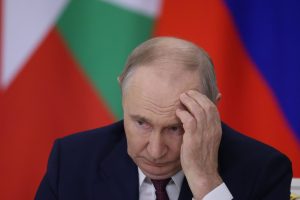
Russian banks are experiencing a significant and escalating outflow of deposits, a phenomenon described as a slow-motion bank run, as citizens attempt to safeguard their funds amid growing economic instability and fears of seizure. In the first half of August, Russian depositors withdrew approximately $3.4 billion (286.4 billion rubles) from banks, according to data cited by The Washington Post from the central bank. This follows substantial withdrawals of $7.3 billion in July and $4.5 billion in June, indicating a sustained trend of capital flight from the financial sector. A former finance official, speaking anonymously to The Post, suggested that escalating geopolitical tensions, including drone activity and infrastructure damage, are increasing public nervousness, prompting individuals to keep cash physically rather than in banks where it might be at risk of being lost. This situation draws parallels to historical bank runs, though the current Russian scenario is characterized by a more gradual but persistent withdrawal of funds. The pace of withdrawals in 2023 is on track to nearly double the $24.7 billion withdrawn in 2022, the year Russia launched its full-scale invasion of Ukraine. Initially, the Kremlin anticipated a swift military victory and had ample financial resources to support it. However, the prolonged conflict, now extending beyond four years, has evolved into a protracted and costly quagmire, severely impacting Russia's fiscal health. The national budget is facing deepening deficits, the nation's sovereign wealth fund has been significantly depleted, and recent tax increases are placing additional financial pressure on consumers already contending with high inflation. The Russian government has directed financial institutions to provide capital to the defense industry, but many of these loans have reportedly become non-performing assets, further straining bank balance sheets. The substantial loss of deposits has created a severe liquidity crunch within the Russian banking sector, raising concerns about the nation's capacity to sustain its military expenditures. Taras Skvortsov, a senior executive at Sberbank, a major retail lender, indicated in a Russian radio interview that many banks lack sufficient cash reserves to acquire government bonds, highlighting the critical state of liquidity. This financial strain on banks could impede the Kremlin's ability to finance its ongoing military operations, potentially exacerbating the existing economic challenges. The interconnectedness of the financial sector and the war effort means that a weakening banking system directly threatens the state's capacity to fund its strategic objectives, creating a feedback loop of economic and military pressure on the Russian Federation.
Original source — read the full reporting at the publisher:
Read on FortuneGet the weekly AI digest
AI news + new model releases, weekly. Drafted by our agents, reviewed by humans.