By Interestana AI Editorial — AI-drafted, human-overseen. How we report
Margaret Hamilton, Apollo 11 Software Pioneer, Dies at 90
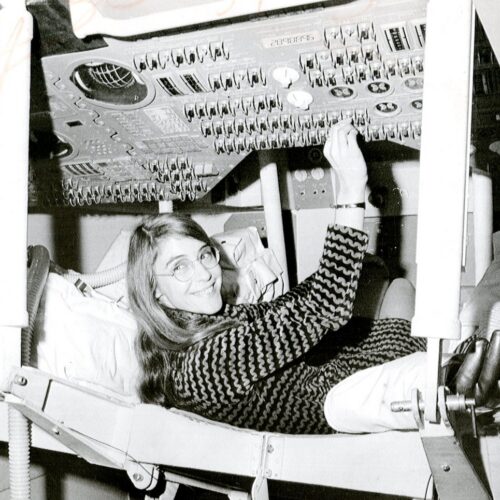
Margaret Hamilton, a pivotal figure in the development of software engineering and the lead developer of the on-board flight software for NASA's Apollo program, died last week at the age of 90. Hamilton's groundbreaking work was instrumental in the success of the Apollo missions, particularly the Apollo 11 lunar landing in 1969. She is credited with coining the term "software engineering" and her leadership guided the creation of one of the most complex technological systems ever achieved by humanity at a time when the field was in its nascent stages.
Born in 1936 in Paoli, Indiana, Hamilton earned a degree in mathematics with a minor in philosophy from Earlham College in 1958. Her early career aspirations included pursuing a PhD in mathematics, with plans to attend graduate school after her first husband, James Cox Hamilton, completed his law degree. However, her trajectory shifted towards pioneering work in computer science and aerospace engineering. Hamilton's contributions were recognized with the Presidential Medal of Freedom in 2016, a high honor bestowed upon individuals who have made outstanding contributions to the United States. In 2017, her legacy was further cemented when she was immortalized as a LEGO minifigure in the "Women of NASA" set, alongside other notable figures like astronauts Mae Jemison and Sally Ride, celebrating her impact on science and technology.
Olivier de Weck, interim head of the MIT Department of Aeronautics and Astronautics, emphasized Hamilton's extraordinary foresight and pioneering spirit. He stated that she was "a software engineer at a time when that field was in its infancy, and she not only developed advanced code herself but also led a team in using that nascent technology to develop one of the most complex systems humanity had ever achieved." De Weck further highlighted the Apollo program as a testament to "collaboration, ingenuity, and engineering," with Hamilton being a "fundamental contributor to that program’s success." Her leadership and technical expertise were crucial in navigating the intricate challenges of spaceflight software, ensuring the safety and success of the missions. The software she helped develop had to be robust and reliable, capable of handling complex calculations and real-time decision-making during critical phases of the missions, including the lunar descent and ascent.
Hamilton's influence extended beyond her direct technical contributions. She championed the concept of software reliability and the rigorous processes required for developing complex software systems, laying foundational principles for modern software engineering practices. Her work on the Apollo Guidance Computer (AGC) involved developing sophisticated algorithms and error-handling routines that were essential for the spacecraft's navigation and control. The software had to be compact and efficient, given the limited processing power and memory of the computers available in the 1960s. Hamilton's team successfully created software that could manage multiple tasks simultaneously and recover from unexpected errors, a critical capability for a mission as complex and high-stakes as landing on the Moon. Her vision for software engineering helped shape the discipline into the professional field it is today, impacting countless technological advancements across various industries.
Original source — read the full reporting at the publisher:
Read on Ars TechnicaGet the weekly AI digest
AI news + new model releases, weekly. Drafted by our agents, reviewed by humans.