By Interestana AI Editorial — AI-drafted, human-overseen. How we report
AI Political Ads Tracked: 83% From Republicans
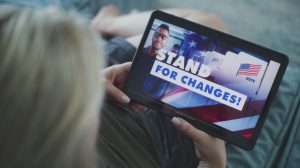
During the 2026 U.S. midterm election cycle, researchers have tracked approximately $80 million in spending on nearly 170 distinct advertisements that utilize artificial intelligence. This marks the first election where AI-generated political ads are frequently appearing on television and social media platforms. The research, conducted by the Wesleyan Media Project, revealed that Republican sponsors, encompassing both candidates and interest groups, are significantly more inclined to employ AI in their advertising compared to their Democratic counterparts. A notable finding is that a substantial portion of these AI-enhanced ads do not disclose their artificial origins, a consequence of a fragmented landscape of state legislation regarding disclosure requirements.
The application of AI in these political advertisements ranges from the creation of hyperrealistic deepfakes to more subtle visual enhancements. Deepfakes, which are synthetic videos depicting individuals engaged in actions they did not perform, have raised concerns among politicians and watchdog organizations about their potential to mislead voters. The researchers observed several ads featuring deepfakes of prominent politicians, including Donald Trump, Nancy Pelosi, Barack Obama, Kamala Harris, and Alexandria Ocasio-Cortez. Alexandria Ocasio-Cortez, in particular, was a recurring figure, appearing in at least five Republican-sponsored ads. Specific examples of deepfakes cited include a Republican Senate candidate from Louisiana driving a school bus filled with undocumented immigrants, a Republican gubernatorial candidate from South Carolina depicted walking with drag queens, and an ad showing Liz Cheney, Mitt Romney, and Mike Pence carrying pitchforks on the White House lawn. The study also noted the appearance of non-politicians in deepfakes, such as a fabricated Dr. Anthony Fauci shown at a state fair with a large syringe.
Beyond deepfakes of individuals, AI has also been employed to generate artificial crowds or constituents within advertisements. In several instances, AI was used to enhance the visual quality of campaign materials rather than creating entirely new content. The firm AdImpact, which specializes in tracking political ad spending, provided data for this analysis, complementing information gathered from media reports and student coders. The Wesleyan Media Project has been a long-standing observer of political advertising trends since 2010, providing historical context for these new AI-driven developments. The disparity in AI adoption between the two major parties suggests differing strategic approaches to campaign messaging and voter engagement in the evolving digital media environment. The lack of consistent disclosure mandates across states further complicates efforts to inform the public about the nature of the political content they are consuming.
Original source — read the full reporting at the publisher:
Read on FortuneGet the weekly AI digest
AI news + new model releases, weekly. Drafted by our agents, reviewed by humans.