By Interestana AI Editorial — AI-drafted, human-overseen. How we report
LUX-ZEPLIN Detector Hints at Elusive Dark Matter, Sparking Global Research Efforts
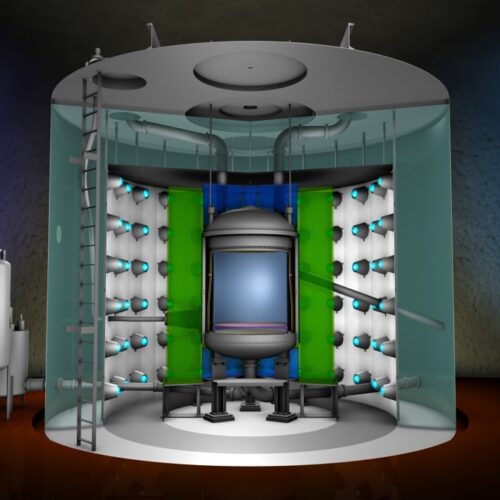
Physicists operating the LUX-ZEPLIN (LZ) detector, situated deep within a South Dakota gold mine, have announced a tantalizing hint of dark matter. This discovery, if confirmed, could represent a monumental breakthrough in our understanding of the universe's composition. Dark matter is a theoretical form of matter believed to constitute approximately 85 percent of all matter in the cosmos, playing a crucial role in the structure and evolution of galaxies. The leading hypothetical candidate for dark matter particles are so-called weakly interacting massive particles (WIMPs), which interact very rarely with ordinary matter. However, the direct detection of WIMPs, or any other proposed dark matter particle, has remained an exceptionally challenging and elusive goal for physicists for decades, marked by numerous null results and fleeting anomalies. The LUX-ZEPLIN experiment, a second-generation dark matter search, is specifically designed to detect these faint interactions by employing a large volume of ultra-pure liquid xenon. Its highly sensitive design aims to capture the minuscule energy depositions that would occur if a WIMP were to collide with a xenon nucleus. The potentially groundbreaking results from LZ were presented at the 2026 TeV Particle Astrophysics conference held in Japan. A preprint of the findings has been made available on the arXiv, a widely used open-access archive for scientific papers, and the research has been submitted to the prestigious journal Physical Review Letters for rigorous peer review. The researchers involved have been careful to emphasize that the observed signal is currently just a hint and falls significantly below the statistical threshold typically required to confirm a discovery. They acknowledge the historical precedent where similar tantalizing anomalies have evaporated as more data was collected, often proving to be mere statistical fluctuations. Nevertheless, the LUX-ZEPLIN team reported that they were unable to account for the observed event through known background processes, leading them to decide to share their preliminary result with the broader physics community. The experiment is actively continuing to collect more data, a crucial step in either solidifying or refuting this initial hint. This global pursuit of dark matter is further underscored by other major detection projects. The XENONnT experiment, located at the Gran Sasso National Laboratory in Italy, is also actively collecting data. Furthermore, China's PandaX detector is currently under construction, signifying a concerted international effort to advance the frontiers of dark matter research. The scientific community now eagerly awaits further data collection and in-depth analysis from LUX-ZEPLIN and its international counterparts to ascertain the true significance of this potential dark matter hint.
Original source — read the full reporting at the publisher:
Read on Ars TechnicaGet the weekly AI digest
AI news + new model releases, weekly. Drafted by our agents, reviewed by humans.