Refiner Profits Soar Amid Lingering Hormuz Supply Chain Issues
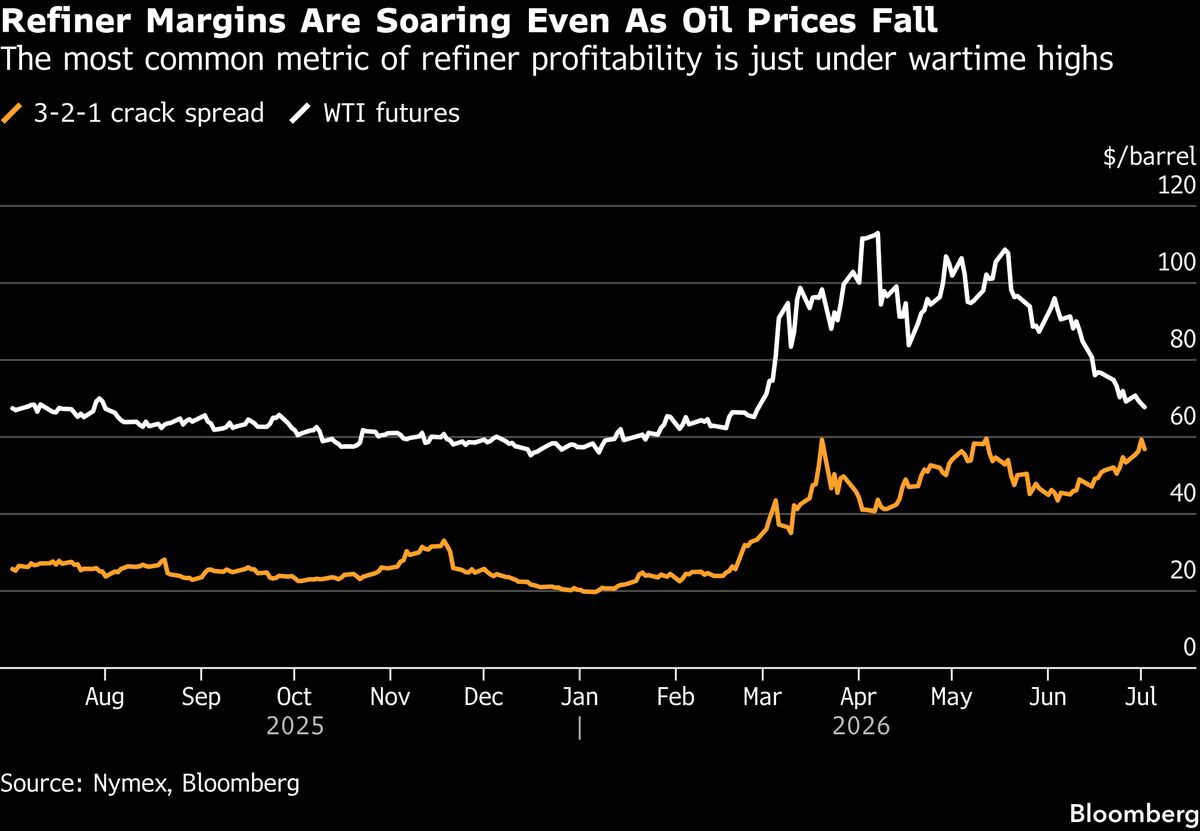
US crude refiners are experiencing some of the highest profit margins in years, signaling ongoing supply chain disruptions that continue to affect global energy markets. Despite an increase in energy shipments passing through the Strait of Hormuz, these logistical challenges persist, leading to favorable conditions for refiners.
These elevated profit margins are a direct consequence of the imbalance between the supply of crude oil and the demand for refined products. Refiners are able to purchase crude oil at relatively lower prices while selling gasoline, diesel, and jet fuel at premium rates. This widening spread, often referred to as the "crack spread," has been a boon for companies like Marathon Petroleum, Valero Energy, and Phillips 66.
The issues stem from a combination of factors, including geopolitical tensions in the Middle East, which have led some shipping companies to reroute vessels, increasing transit times and costs. Additionally, refinery maintenance schedules and unexpected outages have constrained the supply of refined products, further exacerbating the situation. The Strait of Hormuz, a critical chokepoint for global oil trade, has seen increased naval activity and security concerns, contributing to the uncertainty and volatility in the market.
While the overall volume of oil moving through the Strait has shown signs of recovery, the ripple effects of these disruptions are still being felt. The increased costs and risks associated with shipping, coupled with the tight supply of refined fuels, create a complex environment where refiners are able to capitalize on the market dynamics. This situation highlights the fragility of global energy supply chains and their susceptibility to geopolitical events and operational challenges.
Original source — read the full reporting at the publisher:
Read on Bloomberg Markets