By Interestana AI Editorial — AI-drafted, human-overseen. How we report
Reaction Wheel Failures Hamper Swift Rescue Satellite
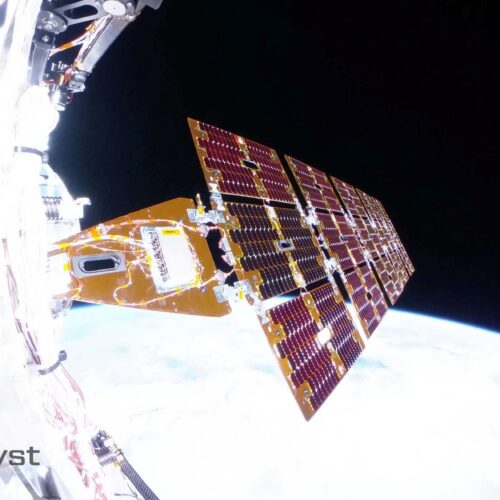
The Link satellite, a pioneering commercial spacecraft developed by Katalyst Space Technologies with the mission to safely deorbit NASA's Swift gamma-ray telescope, is experiencing significant technical difficulties nearly a month after its launch. NASA announced on Tuesday that the satellite "experienced issues with attitude control" over the weekend, leading to the spacecraft spinning uncontrollably and resulting in intermittent communication.
According to NASA's statement, a preliminary investigation revealed that two of Link's three reaction wheels are currently inoperable. Reaction wheels are crucial components for spacecraft attitude control, allowing them to orient themselves in space without expending propellant. Their failure severely compromises the satellite's ability to maintain a stable orientation. Furthermore, the agency reported "some loss of functionality in its cold gas thruster system." These thrusters are typically used for fine adjustments to the spacecraft's orientation and orbit, and their partial failure exacerbates the control issues.
The Link satellite's primary objective was to attach to the Swift telescope, which is nearing the end of its operational life and faces a planned deorbit to prevent it from burning up uncontrollably in Earth's atmosphere. The commercial mission was intended to demonstrate a new capability for extending the life or managing the disposal of aging space assets. The current malfunctions raise concerns about the satellite's ability to perform its critical deorbiting task. The sporadic communications further complicate efforts to diagnose and resolve the problems, as engineers struggle to receive consistent telemetry data from the spacecraft.
Katalyst Space Technologies, the developer of the Link satellite, is working with NASA to understand the root cause of the reaction wheel and thruster failures. The success of this mission was seen as a significant step for the commercial space industry in providing services for satellite servicing and end-of-life management. The current setbacks highlight the inherent complexities and risks associated with developing and deploying advanced spacecraft for novel missions. The agency has not yet provided a revised timeline or contingency plans for the Swift telescope's deorbit, pending further assessment of the Link satellite's status.
Original source — read the full reporting at the publisher:
Read on Ars TechnicaGet the weekly AI digest
AI news + new model releases, weekly. Drafted by our agents, reviewed by humans.