By Interestana AI Editorial — AI-drafted, human-overseen. How we report
Ratko Mladić, Convicted War Criminal, Given Hero's Funeral
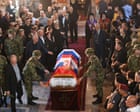
Thousands of mourners gathered in Belgrade, Serbia, for the funeral of Ratko Mladić, a former Bosnian Serb general convicted of genocide and war crimes. Mladić, widely known as the "Butcher of Bosnia," died in prison in late August at the age of 84, where he was serving a life sentence. His funeral, described as a "hero's welcome home," has sparked international alarm and raised questions regarding Serbia's commitment to justice and its aspirations for European Union membership. The presence of prominent figures and the celebratory nature of the event have drawn criticism from international bodies and human rights organizations, who view it as a glorification of a convicted war criminal. The funeral procession reportedly featured military honors and a significant public turnout, underscoring the deeply divided sentiments surrounding Mladić's legacy within Serbia and the wider Balkan region. Mladić was convicted by the International Criminal Tribunal for the former Yugoslavia (ICTY) for his role in orchestrating the Srebrenica massacre, the worst atrocity in Europe since World War II, which resulted in the deaths of over 8,000 Bosniak men and boys. He was also found guilty of crimes against humanity and other war crimes committed during the Bosnian War (1992-1995). The ICTY, established by the United Nations Security Council in 1993, aimed to prosecute individuals responsible for grave breaches of international humanitarian law in the former Yugoslavia. Mladić's conviction in 2017, following a lengthy trial, was a landmark decision in the pursuit of accountability for atrocities committed during the Balkan conflicts. The funeral's public display of support for Mladić has been interpreted by some as a reflection of lingering nationalist sentiments and a potential obstacle to reconciliation in the region. The European Union, which has a stated policy of requiring candidate countries to demonstrate full cooperation with international justice mechanisms, is expected to scrutinize Serbia's response to the controversy. Serbia's path to EU membership involves a complex process of reforms and adherence to democratic and legal standards, including the full normalization of relations with Kosovo, which declared independence in 2008. The funeral's implications for these diplomatic efforts are significant, potentially impacting the timeline and conditions of Serbia's accession negotiations. Human rights advocates have expressed dismay, stating that such events undermine the efforts to establish lasting peace and justice in the Balkans. They argue that honoring individuals convicted of genocide sends a dangerous message and hinders the healing process for victims and survivors. The Serbian government has yet to issue a comprehensive statement addressing the international concerns raised by the funeral, though some officials have distanced themselves from the more extreme displays of support. The event has reignited debates about historical narratives and the challenges of confronting past atrocities in post-conflict societies. The legacy of the Bosnian War continues to cast a long shadow over the region, and events like Mladić's funeral highlight the ongoing struggle for truth and accountability.
Original source — read the full reporting at the publisher:
Read on The Guardian WorldGet the weekly AI digest
AI news + new model releases, weekly. Drafted by our agents, reviewed by humans.