By Interestana AI Editorial — AI-drafted, human-overseen. How we report
IBM Quantum Advantage Tracker Adds Three New Verified Results
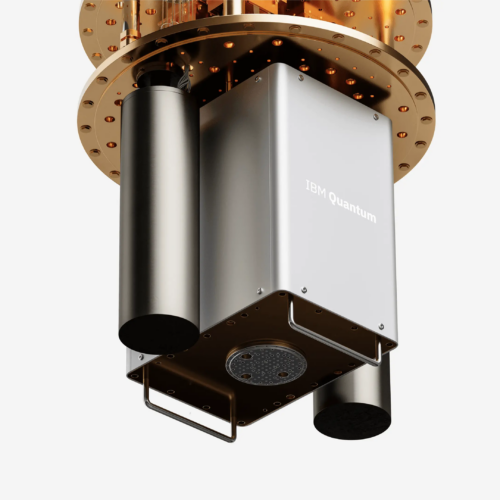
IBM announced on Thursday that its quantum advantage tracker has incorporated three new entries, each representing a distinct approach to demonstrating that quantum computers can outperform classical systems. These additions address the long-standing challenge of verifying quantum computations, especially on current noisy and error-prone quantum hardware. The tracker aims to provide concrete evidence of quantum advantage, a state where a quantum computer can solve a problem that is practically impossible for even the most powerful classical supercomputers.
Historically, the promise of quantum computing has been tied to algorithms proven to offer exponential speedups over classical counterparts. However, the limitations of today's quantum computers, often referred to as Noisy Intermediate-Scale Quantum (NISQ) devices, have hindered the execution of these complex algorithms or forced the use of simplified versions. A significant hurdle has been the inability to verify the correctness of the results produced by quantum computers, particularly when those results are beyond the computational reach of classical machines. This verification challenge is compounded by the inherent error rates in current quantum processors, raising the possibility of generating incorrect outputs.
IBM's quantum advantage tracker was developed to tackle these issues. The three newly added entries utilize different methodologies to overcome the verification problem and demonstrate genuine quantum advantage. One approach involves developing novel error mitigation techniques that reduce the impact of noise on quantum computations, thereby increasing the reliability of the results. Another strategy focuses on creating specific problem instances that are designed to be exceptionally difficult for classical computers to simulate, even with advanced algorithms. The third method likely involves a combination of advanced quantum error correction codes and sophisticated classical post-processing to validate the quantum output.
Jay Gambetta, a key figure at IBM involved in quantum computing research, emphasized the significance of this development. He stated, "Trusted computing when you can do classical simulations is irrelevant." This highlights that the true value of quantum computing emerges when it tackles problems that are intractable for classical computers, making verification a critical component. The ability to trust the results generated by quantum hardware, especially in scenarios where classical simulation is infeasible, marks a pivotal step forward for the field. These verified demonstrations are crucial for building confidence in quantum technology and accelerating its adoption for scientific discovery and complex problem-solving.
Original source — read the full reporting at the publisher:
Read on Ars TechnicaGet the weekly AI digest
AI news + new model releases, weekly. Drafted by our agents, reviewed by humans.