By Interestana AI Editorial — AI-drafted, human-overseen. How we report
Google Ads AI Max Text Customization Tested
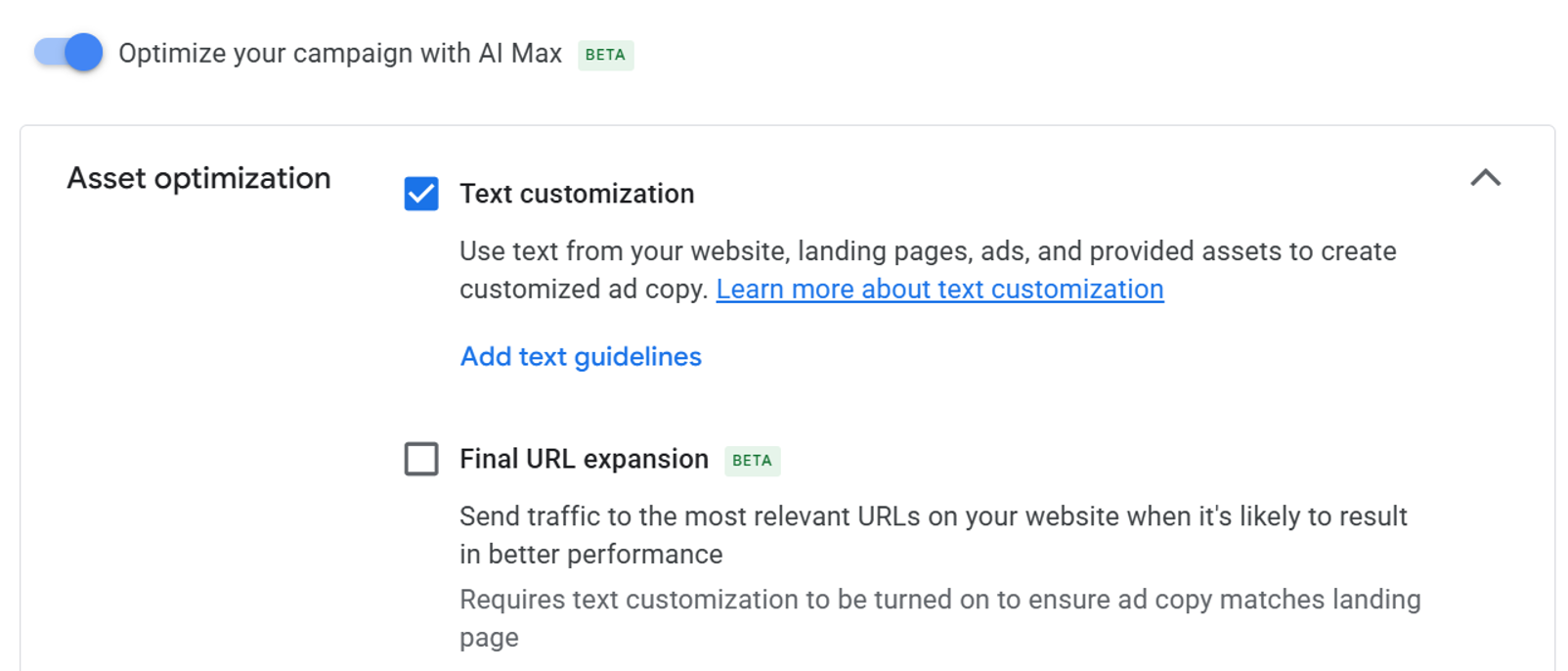
A software company specializing in PPC account management conducted tests to evaluate the effectiveness of Google Ads AI Max's automated text customization feature. The objective was to quantify how well this AI-driven capability performed for various companies, thereby informing the extent to which it should be utilized. The company collaborated with three different businesses to guide them through the setup and analysis of these experiments, focusing on the practical application of AI Max's asset creation capabilities.
Central to the testing process was understanding and configuring AI Max's text customization feature. This AI operates in the background, aiming to tailor ad assets to specific keywords within each ad group. While this personalization can potentially reduce the manual effort required from PPC teams to customize ads for every ad group, the tests highlighted a critical need for careful management. The AI's ability to generate assets meant that ads could inadvertently promote products or services that a company does not offer, or run promotions that are no longer valid. To mitigate these risks, the implementation of messaging restrictions was identified as a crucial step.
Messaging restrictions serve as a guide for the AI system, dictating what the advertisements should and should not communicate. This feature allows businesses to enforce brand guidelines and prevent the generation of undesirable ad content. The process for establishing effective messaging restrictions was described as relatively straightforward, typically requiring one to two hours. It involves using AI tools, such as Gemini, to generate initial ad assets. Subsequently, the system can be prompted to create overly promotional ads or make promises that the business wishes to avoid. By having the AI generate examples of undesirable ads, businesses can then create messaging restrictions to prevent Google from generating similar assets on their behalf. This proactive approach ensures that the automated ad copy aligns with the company's strategic objectives and brand integrity.
The tests aimed to provide empirical data on the performance of AI Max's text customization, moving beyond theoretical benefits to practical outcomes. By guiding the participating companies through the setup and analysis, the software company sought to offer actionable insights for other businesses considering the adoption of AI-powered ad creation tools. The findings were intended to help advertisers make informed decisions about leveraging AI Max, balancing the potential for efficiency gains with the necessity of maintaining control over brand messaging and promotional accuracy. The detailed examination of the setup process and subsequent test results was designed to empower users to replicate the experiment and draw their own conclusions regarding the utility of AI Max's text customization feature within their specific advertising contexts.
Original source — read the full reporting at the publisher:
Read on Search Engine LandGet the weekly AI digest
AI news + new model releases, weekly. Drafted by our agents, reviewed by humans.