By Interestana AI Editorial — AI-drafted, human-overseen. How we report
Artists Protest OpenAI With Sinking Ship Sculpture
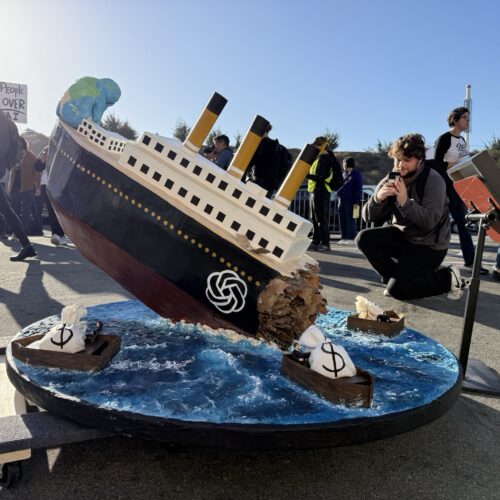
Two artists from the Bay Area's Odd Friend Studio unveiled a large-scale installation titled "What Iceberg?" at the public entrance to an OpenAI developer event held in San Francisco on Tuesday. This artistic protest, standing 5 feet tall and constructed from papier-mâché, cardboard, paint, and a repurposed table, was created over the preceding five days. The sculpture visually represents OpenAI's leadership and investors departing a sinking ship laden with "unimaginable wealth," while the broader public is left to confront the "cost of AI." One of the co-creators, who identified himself only as "Kevin" and is described as being in his late 30s, explained the symbolic intent behind the piece. This installation highlights growing concerns and critiques surrounding the rapid advancement and deployment of artificial intelligence technologies, particularly regarding their societal and economic implications. The choice of venue, an OpenAI developer event, underscores the artists' direct engagement with the company at the heart of these technological developments. The event itself was a gathering for developers working with OpenAI's technologies, providing a platform for showcasing new advancements and fostering community within the AI ecosystem. The artists' action injects a critical perspective into discussions often dominated by technological progress and potential benefits, bringing to the forefront ethical considerations and potential negative externalities. The sculpture's placement at the public entrance ensured visibility to attendees and potentially broader public attention, serving as a tangible representation of dissent. The use of readily available materials like papier-mâché and cardboard suggests an accessible, grassroots approach to protest, contrasting with the high-tech nature of OpenAI's work. The phrase "unimaginable wealth" points to criticisms regarding the economic concentration of benefits derived from AI development, often benefiting a select few while the societal costs are distributed more widely. The "cost of AI" can encompass a range of issues, including job displacement, environmental impact from computation, ethical dilemmas in AI decision-making, and the potential for misuse of the technology. The artists' creative approach offers a non-confrontational yet impactful method of raising awareness and prompting reflection among those directly involved in shaping the future of AI. This form of artistic activism is becoming increasingly common as a way to engage with complex technological and societal issues, providing a visual narrative that can resonate with a wider audience than purely technical or policy-focused discussions. The event's location in San Francisco, a hub for technological innovation, further situates this protest within a broader context of ongoing debates about the role and responsibility of tech companies in society. The specific mention of "Tuesday" anchors the event to a concrete date, allowing for tracking of related news and developments. The Odd Friend Studio, based in Berkeley, indicates a connection to the academic and creative communities in the Bay Area, known for their engagement with social and technological issues. The artists' decision to remain partially anonymous, with "Kevin" being the only name provided, could be a strategic choice to focus attention on the message of the artwork rather than the individuals behind it, or it could reflect concerns about potential repercussions.
Original source — read the full reporting at the publisher:
Read on Ars TechnicaGet the weekly AI digest
AI news + new model releases, weekly. Drafted by our agents, reviewed by humans.