By Interestana AI Editorial — AI-drafted, human-overseen. How we report
Protesters Occupy 200-Year-Old Tree at US-Mexico Border
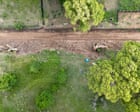
Protesters have initiated a "tree sit" in Lochiel, Arizona, a small town situated in the remote San Rafael valley of southeastern Arizona, to halt the destruction of an ancient cottonwood grove. This action is a direct response to federal contractors' efforts to construct a 30-foot border wall along the boundary with Sonora, Mexico. The demonstration intensified last week, following an incident on July 27, when contractors employed by Fisher Sand and Gravel used excavators to crush three of the largest cottonwood trees in the area. The protesters view the trees, some estimated to be 200 years old, as vital natural landmarks and have drawn parallels between the ancient cottonwood and the Statue of Liberty, symbolizing their resistance against the perceived environmental and cultural destruction. The San Rafael valley is known for its unique ecosystem, which includes these mature cottonwood trees that provide critical habitat for local wildlife and contribute to the region's biodiversity. The construction project, commissioned by the U.S. government, aims to reinforce border security by erecting a physical barrier, a common strategy employed in border regions. However, environmental advocates and local residents have raised significant concerns about the ecological impact of such projects, particularly on sensitive riparian habitats like the one found in the San Rafael valley. The cottonwood trees, with their deep root systems, play a crucial role in stabilizing the soil and maintaining water quality in the area. Their removal could lead to increased erosion and habitat fragmentation, affecting numerous species that depend on the grove for survival. The protesters' "tree sit" strategy, a form of nonviolent direct action, involves individuals occupying the trees to make their physical removal by authorities or contractors more difficult and conspicuous. This tactic has been employed historically in environmental activism to draw attention to threatened natural sites. The specific location in Lochiel is part of a larger effort to secure the U.S.-Mexico border, a complex and often contentious issue involving national security, immigration policy, and environmental considerations. The destruction of the cottonwood grove highlights the ongoing tension between border enforcement objectives and the preservation of natural landscapes and ecosystems. The protesters' determination underscores the deep emotional and ecological connection they feel to these ancient trees, which they consider irreplaceable natural heritage. The involvement of Fisher Sand and Gravel as the contracting company indicates the scale of the federal project, which typically involves significant infrastructure development. The incident of the crushed trees serves as a stark visual representation of the conflict, fueling further opposition and potentially influencing public discourse on border wall construction and its environmental consequences. The protesters' plea to protect the trees frames the issue not just as a border security matter but as a fight for environmental preservation and the protection of natural monuments.
Original source — read the full reporting at the publisher:
Read on The Guardian EnvironmentGet the weekly AI digest
AI news + new model releases, weekly. Drafted by our agents, reviewed by humans.