By Interestana AI Editorial — AI-drafted, human-overseen. How we report
Protester Networks Challenge Modi's Power in India
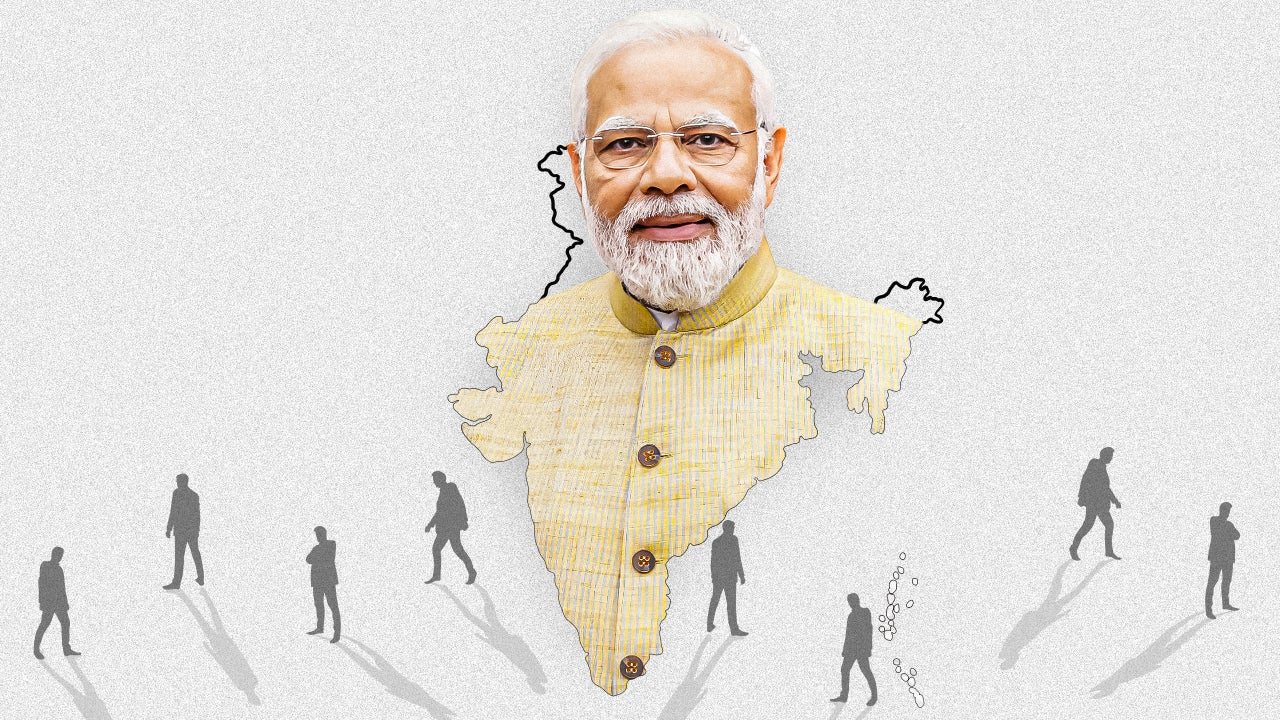
Decentralized networks of protesters are increasingly challenging the established power of leaders, a phenomenon exemplified by recent events in India that have put pressure on Prime Minister Narendra Modi's government. These movements, often starting small and seemingly insignificant, can rapidly escalate into widespread challenges, a process network scientists refer to as an "instantaneous phase transition." By the time leaders recognize the scale of these movements, it is frequently too late to effectively counter them. This pattern mirrors historical events such as the "color revolutions" in Eastern Europe in the early 2000s, which led to the downfall of regimes in Serbia, Georgia, and Ukraine, and the Arab Spring uprisings that toppled governments across the Middle East. Business leaders have also faced similar challenges, including campaigns against Nike's labor practices and protests targeting data centers. The underlying structure of these movements, though varied in their specific causes and manifestations, shares commonalities that, if understood, can enable leaders to respond more effectively to emerging threats. A key principle observed by Saul Alinsky in "Rules for Radicals" is that "every revolution inspires its own counterrevolution." This suggests that the very exercise of power can inadvertently sow the seeds of resistance. When a regime achieves dominance, as Modi's government has in India, the expectation is often for its power to consolidate and grow. However, the exercise of power can also breed resentment, particularly when segments of the population perceive that the benefits of this power are disproportionately accruing to insiders. In India, a growing suspicion, especially among younger demographics, has emerged that individuals in high positions may be abusing their authority for personal gain and to create preferential conditions for their relatives. This perception of cronyism and the concentration of power can fuel discontent and mobilize opposition. The satirical Cockroach Janta Party, for instance, played a role in a recent protest that led to the resignation of India's education minister, illustrating how even unconventional groups can contribute to significant political pressure. The analysis posits that leaders must remain vigilant to the accumulation of resentment and the potential for seemingly disparate grievances to coalesce into a formidable collective challenge. Understanding the network dynamics and the psychological underpinnings of resistance is crucial for navigating these complex political landscapes and for preventing the erosion of authority. The failure of many movements to survive their initial victory is often attributed to internal divisions or a loss of momentum once initial objectives are met, but the initial challenge to power, as seen in India, stems from the inherent dynamics of power itself and the societal reactions it engenders.
Original source — read the full reporting at the publisher:
Read on Fast CompanyGet the weekly AI digest
AI news + new model releases, weekly. Drafted by our agents, reviewed by humans.