By Interestana AI Editorial — AI-drafted, human-overseen. How we report
Pony.ai CEO Predicts Widespread Robotaxis in Five Years
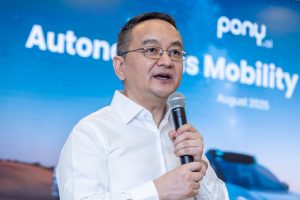
James Peng, founder and CEO of the Chinese autonomous driving firm Pony.ai, predicted that robotaxis will become a common sight on global streets within the next five years. Speaking at the Fortune Leaders Forum in Macau on September 8, Peng stated that "the technology problem is pretty much already solved," and that hailing a robotaxi will soon be as routine as using a traditional taxi. While Waymo is a prominent name in the U.S. robotaxi sector, Chinese companies like Pony.ai are making significant advancements internationally. Founded in 2016, Pony.ai currently operates commercial robotaxi services in major Chinese cities including Beijing, Guangzhou, Shenzhen, and Shanghai, averaging approximately 25 rides per vehicle per day. Peng noted that the user base for these services is diverse, encompassing various age groups and professions, indicating broad public acceptance beyond early adopters. Pony.ai is also actively pursuing international expansion. In August, the company announced an enhanced collaboration with Uber to deploy over 2,000 robotaxis across Europe. This initiative builds upon their existing operations in Zagreb, Croatia, and includes an agreement to introduce 200 robotaxis to South Korea by 2028. The company has also established partnerships in the Middle East and Singapore. Peng outlined his strategy for selecting expansion locations, prioritizing cities with high taxi fares and supportive regulatory frameworks. He believes that collaborations with ride-sharing platforms like Uber are instrumental in building public trust and encouraging governmental and policymaker adoption of driverless transportation. Other autonomous driving companies, such as WeRide and Baidu, are also engaged in international ventures, particularly in Southeast Asia and Europe. Peng attributed China's leadership in autonomous driving to its "supportive" regulatory environment, which he described as a crucial factor for fostering innovation in such a complex field. He emphasized that the development of autonomous driving requires a robust ecosystem encompassing hardware, software, and skilled talent, a system that China is well-positioned to provide. The widespread adoption of robotaxis has the potential to fundamentally alter urban landscapes and transportation patterns. Peng highlighted that most private vehicles are utilized for only about two hours daily, suggesting that a shift towards shared autonomous fleets could lead to more efficient use of resources and potentially reshape urban mobility.
Original source — read the full reporting at the publisher:
Read on FortuneGet the weekly AI digest
AI news + new model releases, weekly. Drafted by our agents, reviewed by humans.