By Interestana AI Editorial — AI-drafted, human-overseen. How we report
Polish PM Pledges WW2 Genocide Memorial
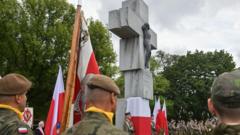
Polish Prime Minister Donald Tusk pledged this week to erect a memorial honoring victims of what he described as "genocide by Ukrainian nationalists" during World War Two. This statement, made during a visit to Ukraine, reignites a long-standing and sensitive historical dispute between Poland and Ukraine concerning the mass killings of Polish civilians in Volhynia and Eastern Galicia. The Polish Institute of National Remembrance estimates that approximately 100,000 Poles were killed by Ukrainian nationalist militias, primarily the Ukrainian Insurgent Army (UPA), between 1943 and 1945.
Historically, Poland has characterized these events as genocide, a term that Ukraine has largely resisted, preferring to refer to them as a tragedy or a mutual conflict. Ukrainian nationalist historiography often views the UPA as freedom fighters who battled both Nazi Germany and the Soviet Union for Ukrainian independence. The differing interpretations of these wartime atrocities have been a persistent source of friction in bilateral relations, impacting diplomatic efforts and public sentiment.
Prime Minister Tusk's commitment to building a memorial signals a potential shift in the Polish government's approach to this historical issue. While Tusk emphasized the need for reconciliation and understanding, his use of the term "genocide" is likely to be met with strong reactions in Ukraine. The Polish government has previously sought to balance historical remembrance with the need for strategic partnership, particularly in the context of current geopolitical challenges. However, this pledge indicates a prioritization of acknowledging the Polish victims' suffering.
This development comes at a critical juncture, with Ukraine heavily reliant on international support, including from Poland, in its ongoing conflict with Russia. The historical dispute, while deeply rooted, could complicate efforts to maintain a united front. Polish President Andrzej Duda has previously called for a "difficult dialogue" on the Volhynia massacre, and Tusk's statement appears to be a direct response to this ongoing national discourse. The exact location and design of the proposed memorial have not yet been detailed, but its construction will undoubtedly be closely watched by both nations and international observers.
Original source — read the full reporting at the publisher:
Read on BBC World NewsGet the weekly AI digest
AI news + new model releases, weekly. Drafted by our agents, reviewed by humans.