By Interestana AI Editorial — AI-drafted, human-overseen. How we report
SpaceX's Falcon 9 Dominance Reshapes Global Launch Market, New Research Highlights
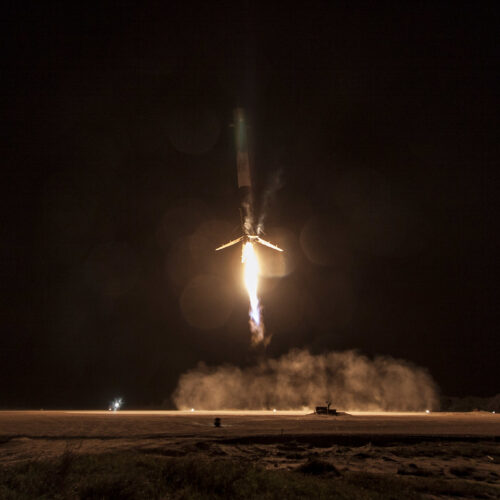
Over the past decade, SpaceX has fundamentally transformed the global space launch market, primarily through the innovative reuse of its Falcon 9 rocket's first stages. While the company began achieving regular landings of these stages around ten years ago, it's only within the last five years that this capability has been scaled to an unprecedented level, enabling dozens and then hundreds of successful flights and reuses annually. This dramatic increase in operational tempo and the successful implementation of reusability have drastically reduced launch costs, positioning SpaceX as the dominant force in orbital access. Consequently, SpaceX is now responsible for more than three-quarters of all mass launched into Earth orbit.
A significant portion of this launched mass is comprised of SpaceX's own Starlink satellite constellation, an ambitious project designed to deliver global broadband internet coverage. However, the cost-effectiveness and the limited availability of alternative launch services have compelled numerous other entities to rely on SpaceX for deploying their payloads. This includes not only commercial ventures but also payloads from direct competitors and established players in the satellite industry. Notable examples of companies entrusting their missions to SpaceX include Amazon, Northrop Grumman, AST Space Mobile, and OneWeb. This widespread reliance underscores the profound market disruption initiated by SpaceX's operational efficiency and its ability to offer significantly lower per-launch costs.
Emerging research is now quantifying the full extent of this market upheaval. The introduction of the Falcon 9 rocket, coupled with the widespread adoption of its reusable technology and the vehicle's exceptionally high launch frequency, has reshaped the competitive landscape and the economics of accessing space. This analysis aims to provide concrete data illustrating how these factors have not only lowered the barrier to entry for space-based services but also facilitated the deployment of large satellite constellations and a broader spectrum of commercial and governmental payloads. The implications of this shift are far-reaching, influencing satellite manufacturing, orbital debris management strategies, and the overall expansion of the space economy, ushering in a new era of more frequent and affordable access to orbit.
Original source — read the full reporting at the publisher:
Read on Ars TechnicaGet the weekly AI digest
AI news + new model releases, weekly. Drafted by our agents, reviewed by humans.