By Interestana AI Editorial — AI-drafted, human-overseen. How we report
Police Warned of Far-Right Group Before Dover Unrest
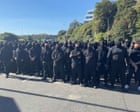
Kent police were informed the night before far-right agitators blocked roads into Dover that the individuals involved had gathered in a village located 18 miles away, intending to use it as a staging ground for their actions. Residents of Preston-next-Wingham reported that hundreds of men began arriving in the village, which has a population of just over 920 people, on Friday afternoon, effectively "taking over" the community. This intelligence was reportedly shared with Kent police prior to the events that unfolded, which saw roads leading into Dover being obstructed. The far-right activists were allegedly heard boasting in a pub about their intentions to travel to Dover to "attack Muslims." The convergence of these individuals in Preston-next-Wingham, a quiet rural village, created a significant and noticeable presence. Local accounts describe the scale of the gathering as hundreds of men, a substantial number relative to the village's small permanent population. This influx of individuals on Friday afternoon led to a situation where the village felt "taken over" by the group. The specific details of this prior warning to Kent police highlight a potential missed opportunity to preempt or mitigate the subsequent unrest in Dover. The nature of the intelligence, including the specific location of the convergence and the stated intentions of the group, underscores the proactive planning attributed to the far-right agitators. The report of activists boasting about their plans in a pub further solidifies the forewarning received by law enforcement. The events in Dover involved the blocking of roads, a tactic commonly employed to disrupt movement and create a visible demonstration. The targeting of "Muslims" as stated in the activists' boasts indicates a clear motive rooted in xenophobia and anti-immigrant sentiment. The scale of the group, described as "hundreds of men," suggests a well-organized and substantial mobilization. The choice of Preston-next-Wingham as a "launchpad" indicates a strategic decision to gather and potentially coordinate activities away from the immediate vicinity of their intended target. This information, passed to Kent police before the unrest, raises questions about the response and the measures taken to address the threat. The incident underscores the challenges faced by law enforcement in monitoring and responding to the movements and intentions of far-right groups, particularly when they operate in less conspicuous locations before launching their activities. The detailed intelligence provided to the police prior to the Dover unrest suggests a level of awareness that could have potentially led to a different outcome had it been acted upon more decisively. The involvement of "far-right agitators" points to a politically motivated and ideologically driven group, whose actions are aimed at creating social disruption and promoting a specific agenda. The reported boasting in a pub serves as a concrete example of how such groups may openly discuss their plans, providing actionable intelligence to those who are attentive.
Original source — read the full reporting at the publisher:
Read on The Guardian WorldGet the weekly AI digest
AI news + new model releases, weekly. Drafted by our agents, reviewed by humans.