By Interestana AI Editorial — AI-drafted, human-overseen. How we report
Parasitic 'Zombie-Ant' Fungus Discovered Thriving in Mosses, Suggesting Dual Life Stage
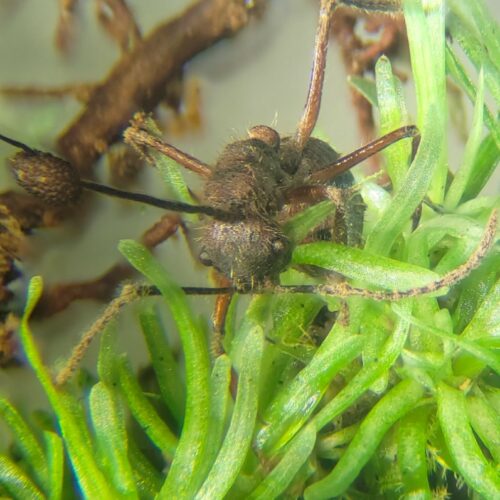
The parasitic fungi belonging to the Cordyceps genus, widely recognized for their remarkable ability to infect and control insects, have been found to also thrive within mosses. This significant discovery, detailed in a recent publication in the esteemed scientific journal IMA Fungus, was brought to light through meticulous DNA analysis. Researchers identified the genetic signature of the same Cordyceps fungus not only within parasitized insects but also within the surrounding mosses, a finding that has profound implications for our understanding of these fascinating organisms.
The Cordyceps genus has long captivated both the scientific community and the public imagination. Its intricate parasitic life cycles have been prominently featured in nature documentaries and have even permeated popular culture, most notably through the highly successful video game "The Last of Us," released in 2013, and its subsequent television adaptation. In these narratives, the fungus mutates to infect humans, mirroring its real-world ability to manipulate insect behavior. Scientists are particularly keen to study Cordyceps due to its potential to illuminate the origins and complex mechanisms underlying pathogen-based diseases.
The latest finding suggests the existence of a previously unrecognized second life stage for the fungus, during which it resides within mosses. This adaptation may serve as a crucial evolutionary strategy for the fungus to ensure its survival during periods when its primary insect hosts are scarce. This dual habitat could also offer an explanation for a peculiar behavior observed in infected insects: their tendency to bite into mosses during their final moments of life. It is hypothesized that the fungus may be directing its host to seek out mosses as a preferred location for its death throes, potentially to facilitate spore dispersal or to establish its secondary life stage.
This research builds upon existing knowledge that the Cordyceps genus encompasses a vast diversity, with over 400 distinct species identified. Each of these species is highly specialized, targeting particular insect hosts such as ants, dragonflies, cockroaches, aphids, and beetles. The infection process typically begins when Cordyceps spores attach to a susceptible insect, for instance, a carpenter ant. Upon germination, the fungus rapidly spreads throughout the host's body, utilizing long, thread-like structures known as mycelia. This internal colonization effectively transforms the insect into a "zombie slave," as the fungus manipulates the host's nervous system and musculature. The compelled behavior often involves the ant climbing to the highest accessible point on a nearby plant, where it clamps its mandibles onto a leaf or twig in a death grip. This characteristic posture is believed to optimize the fungus's chances for spore dispersal, thereby enabling it to infect new insect hosts or, as this new research indicates, to establish itself within mosses.
Original source — read the full reporting at the publisher:
Read on Ars TechnicaGet the weekly AI digest
AI news + new model releases, weekly. Drafted by our agents, reviewed by humans.