By Interestana AI Editorial — AI-drafted, human-overseen. How we report
Orthodox Church sends medieval prince’s remains to Russian troops in Ukraine
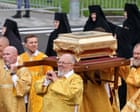
The Russian Orthodox Church has dispatched a significant relic – a fragment of the right hand of Prince Dmitry Donskoy – to Russian military personnel currently engaged in the conflict in Ukraine. This move, reported on September 10, 2026, is explicitly stated to be for the purpose of "spiritually strengthening" the soldiers and aiding them in achieving victory. The reliquary, a container for sacred relics, holding this piece of Donskoy's hand has been transported to Russian-occupied eastern Ukraine and is presently being moved along the frontline, bringing it into close proximity with active combat units.
Dmitry Donskoy (c. 1350-1389) was a Grand Prince of Moscow and a pivotal figure in Russian history. He is most revered for his leadership in the Battle of Kulikovo in 1380, a landmark event where he led a united Russian army to a decisive victory over the Mongol Golden Horde. This triumph marked a turning point in the centuries-long Mongol domination of Rus' and is widely celebrated as a foundational moment in the formation of a unified Russian state. Donskoy's veneration in Russia stems from this historical military achievement, positioning him as an enduring symbol of national resilience, leadership, and triumph against foreign invaders.
The decision by the Russian Orthodox Church to send a part of his remains to the current military theatre in Ukraine is a deliberate symbolic act. It aims to invoke historical precedents of Russian military success and foster a sense of national unity and divine favor among the troops. The Russian Orthodox Church has a long and intertwined history with the Russian state, often playing a significant role in supporting national endeavors, including military campaigns. Historically, such support has frequently been framed within a spiritual or divine mandate, seeking to legitimize and sanctify the actions of the state.
This particular act aligns with a broader narrative that seeks to imbue the ongoing conflict in Ukraine with historical and religious significance, potentially drawing parallels between current events and past struggles for Russian statehood and identity. The church's involvement suggests a strategic effort to bolster morale among Russian soldiers by connecting them to a revered historical figure and the perceived spiritual backing of the church. The transport of the relic along the frontline is a tactical approach designed to maximize exposure of this sacred object to as many soldiers as possible. This practice of bringing religious artifacts to military personnel is not unprecedented, as many cultures and religions have historically utilized relics and religious symbols to inspire, unify, and provide comfort to soldiers during times of war. The specific choice of Dmitry Donskoy's hand, a part directly associated with his leadership and victory at Kulikovo, is intended to serve as a potent emblem of strength, historical continuity, and divine favor for the soldiers facing the rigors of combat.
Original source — read the full reporting at the publisher:
Read on The Guardian WorldGet the weekly AI digest
AI news + new model releases, weekly. Drafted by our agents, reviewed by humans.