By Interestana AI Editorial — AI-drafted, human-overseen. How we report
Canada Wildfires Create Orange Haze Across Ontario, Northern US
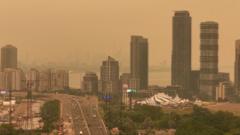
As of this week, 838 wildfires are actively burning across Canada, according to the Canadian Interagency Forest Fire Centre (CIFFC). These fires have generated substantial smoke plumes, leading to a widespread orange haze observed in Ontario, Canada, and extending into several northern states of the United States. The smoke is impacting air quality in affected regions, prompting advisories and concerns for public health.
The CIFFC reports that the majority of these active fires are located in Quebec and Alberta. The smoke, carried by prevailing wind patterns, has traveled significant distances, reducing visibility and contributing to unhealthy air conditions. Residents in affected areas have reported a distinct orange tint to the sky, particularly during daylight hours. Air quality alerts have been issued in several Canadian and American cities, advising vulnerable populations, including children, the elderly, and individuals with respiratory conditions, to limit outdoor activities.
While the exact number of fires contributing to the haze in specific regions is difficult to pinpoint, the sheer volume of active blazes across the country is the primary driver. The situation is dynamic, with fire conditions and smoke dispersion subject to weather changes. Authorities are monitoring the fires and air quality closely, providing updates on containment efforts and air quality forecasts. The long-range transport of smoke from large wildfires is a growing concern, highlighting the transboundary nature of environmental impacts from such events.
Original source — read the full reporting at the publisher:
Read on BBC World NewsGet the weekly AI digest
AI news + new model releases, weekly. Drafted by our agents, reviewed by humans.