By Interestana AI Editorial — AI-drafted, human-overseen. How we report
Oil Prices Surge Past $107 as Drone Attacks Disrupt Saudi Arabia's East-West Pipeline
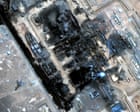
Global oil prices experienced a notable ascent, with Brent crude, the internationally recognized benchmark for oil pricing, surpassing the $107 per barrel mark on Monday. This price spike was directly triggered by a series of coordinated drone attacks that necessitated Saudi Arabia, the world's leading oil exporter, to temporarily suspend operations on its critical East-West crude pipeline. At its zenith on Monday, Brent crude reached an intraday high of $108 a barrel before settling at $107.7, reflecting a significant 3% increase over the course of the trading day. This disruption to Saudi Arabia's extensive oil infrastructure has amplified existing concerns regarding the stability and security of global oil supplies. The attacks have been attributed to the Houthi rebel movement, which is actively engaged in a protracted conflict within Yemen. The Houthis have increasingly adopted a strategy of targeting oil-related infrastructure within Saudi Arabia as a component of their ongoing military campaign. The East-West pipeline itself is an indispensable logistical artery for Saudi Arabia's oil export operations. It plays a crucial role in transporting crude oil from the kingdom's prolific eastern oil fields, located in the Persian Gulf, to the strategically important Red Sea port of Shuqaiq on the country's western coast. The pipeline's closure directly curtails Saudi Arabia's capacity to deliver oil to international markets, particularly those that are accessible via the Red Sea and subsequently the Suez Canal, a vital global shipping lane. This incident serves as a stark reminder of the persistent geopolitical risks that are intrinsically linked to energy supply routes, especially within the volatile Middle East region. The Bab al-Mandab strait, a narrow maritime chokepoint that is absolutely critical for global shipping and the transit of oil, has also witnessed heightened strategic importance and increased activity amid the ongoing conflict. The reported capture of a strategic island within the Bab al-Mandab strait by Houthi forces further exacerbates regional tensions and introduces heightened potential threats to maritime trade and overall energy security in this pivotal area. The market's immediate reaction underscores its acute sensitivity to any disruption originating from major oil-producing nations, with Saudi Arabia, a cornerstone of the Organization of the Petroleum Exporting Countries (OPEC) and a dominant force in global energy markets, being a particular focal point. Investors and traders are meticulously monitoring such developments for their potential cascading effects on global energy prices and broader economic stability. The protracted conflict in Yemen, coupled with the complex and evolving regional geopolitical dynamics, continues to present a persistent risk factor for oil supply, inevitably leading to increased price volatility in the international oil markets.
Original source — read the full reporting at the publisher:
Read on The Guardian WorldGet the weekly AI digest
AI news + new model releases, weekly. Drafted by our agents, reviewed by humans.