By Interestana AI Editorial — AI-drafted, human-overseen. How we report
Offshore Wind Training Faces Uncertainty Amid Policy Shifts
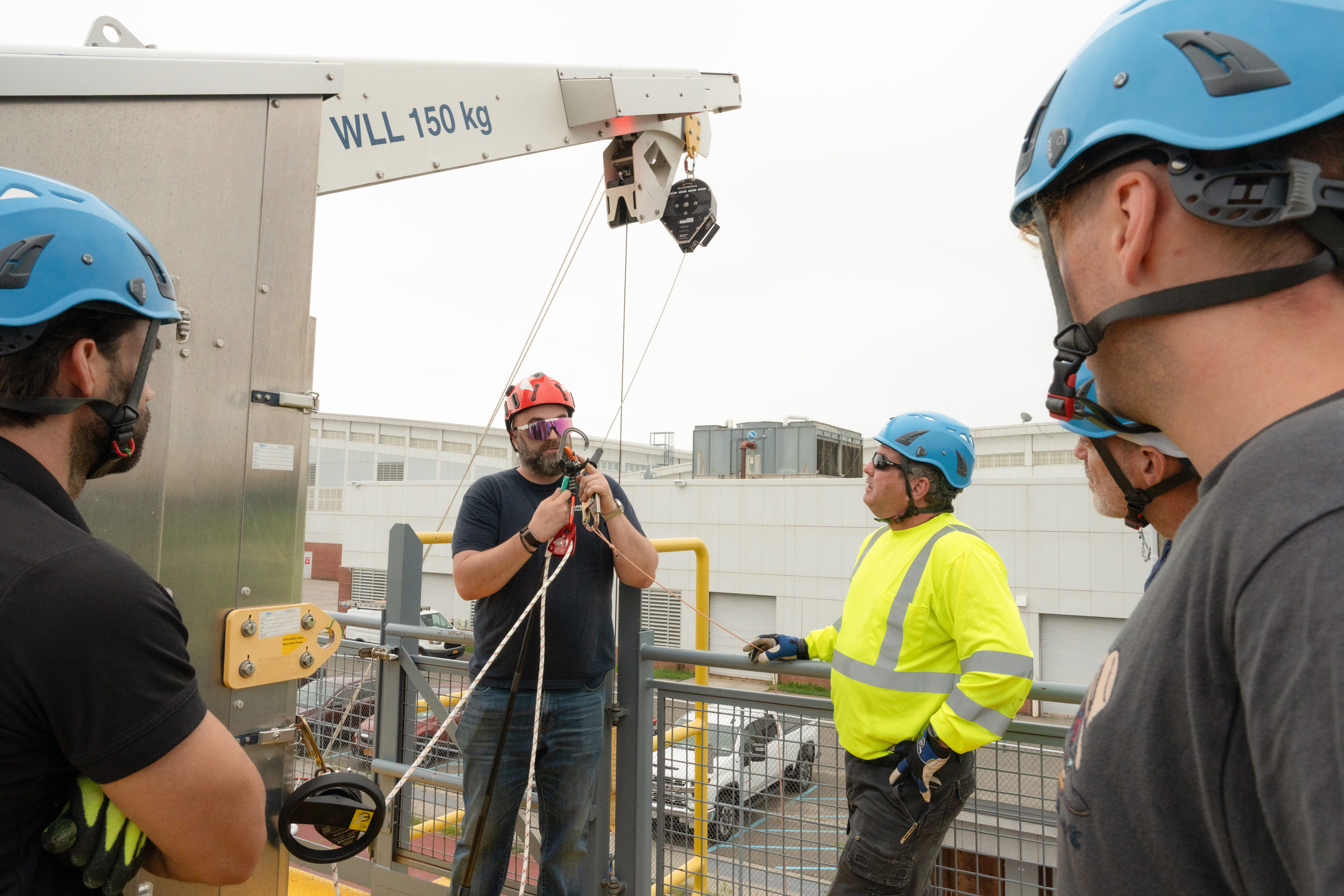
Job training programs established to support the burgeoning offshore wind industry are encountering significant uncertainty due to shifts in policy and project cancellations. William “Billy” Bishop, a former Navy sailor and union laborer from Local 1298 on Long Island, transitioned to offshore wind construction two years ago, obtaining a safety certification from the National Offshore Wind Training Center (NOWTC). This center is a collaborative effort involving Suffolk County Community College, the Long Island Federation of Labor, and the multinational wind farm developer Orsted. Bishop subsequently worked on a wind farm near Rhode Island and is currently involved in structural inspections and maintenance for Sunrise Wind, a project under construction off the coast of Long Island, New York. However, the political climate, particularly efforts by the Trump administration to curtail offshore wind projects as part of a broader stance against clean energy, has introduced considerable doubt for training initiatives like NOWTC and for workers like Bishop. Bishop expressed his concern, stating, “I would definitely do this forever, and I’ve looked into it since getting the job. But I see contracts are falling through nonstop now in America. This might be the last one for a while.”
The Biden administration's 2021 objective to achieve 30 gigawatts of offshore wind power generation by the end of the current decade, a substantial increase from nearly zero, had spurred a significant push for workforce development in the sector. This ambitious expansion was projected to necessitate an estimated 77,000 workers across various roles, including the construction of wind farms, grid connection, operation and maintenance of facilities, and the manufacturing of essential steel components. In response to this anticipated demand, numerous states, energy developers, universities, unions, and community workforce groups initiated diverse educational and training programs focused on offshore wind. These initiatives included the provision of safety certifications for skilled laborers and other specialized training.
Instructor Ian Champlin was observed demonstrating a casualty rescue procedure as part of a safety training session at the National Offshore Wind Training Center in Brentwood, New York, on July 21. The programs were designed with the expectation of sustained growth in the offshore wind sector, mirroring the rapid build-out seen in other countries. However, recent project cancellations and delays, attributed in part to economic factors and policy uncertainties, have cast a shadow over the long-term viability of these training efforts. The National Offshore Wind Training Center, for instance, was established with the explicit goal of preparing a skilled workforce to meet the projected demand, a demand that now appears less certain. The collaboration between educational institutions, labor organizations, and industry players like Orsted aimed to create a pipeline of qualified workers capable of supporting the development and maintenance of offshore wind infrastructure.
The uncertainty surrounding the future of offshore wind projects in the United States directly impacts the investment in and continuation of these specialized training programs. Workers who have invested time and resources in acquiring new skills for this industry now face the prospect of limited job opportunities in the short to medium term. The initial surge in training was predicated on the assumption of consistent policy support and project development, an assumption that is now being challenged by the evolving political and economic landscape. The long-term success of the offshore wind industry in the U.S. is intrinsically linked to the stability of policy frameworks and the sustained commitment of developers and government bodies to project execution.
Original source — read the full reporting at the publisher:
Read on GristGet the weekly AI digest
AI news + new model releases, weekly. Drafted by our agents, reviewed by humans.