By Interestana AI Editorial — AI-drafted, human-overseen. How we report
Beyond Neanderthals: African 'Ghost Lineage' Reveals Ancient Human Interbreeding
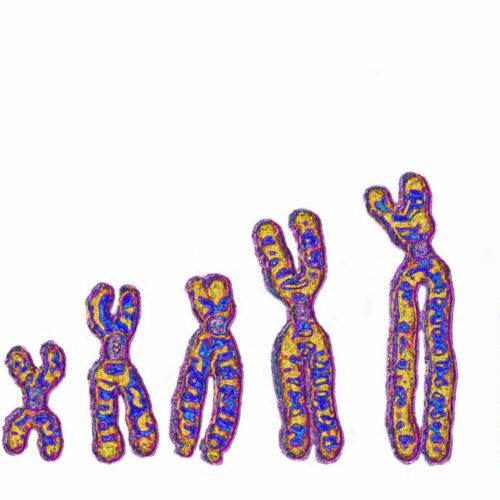
The narrative of human ancestry has long acknowledged interbreeding with our closest extinct relatives, the Neanderthals and Denisovans. This interbreeding is a significant chapter, with Neanderthal DNA, on average, comprising about 2% of the genome in many modern human populations. However, as scientific inquiry delved deeper into extensive genetic datasets, persistent hints of other, less defined ancestral contributions began to emerge. These anomalies were challenging to precisely identify, partly because the Neanderthal genetic contribution is not uniform; any two individuals might share different segments of that 2%, making a generalized picture elusive.
The advent of recently developed analytical techniques has now provided compelling evidence for a third archaic human lineage. This discovery suggests that modern humans engaged in interbreeding with at least one other archaic hominin group *before* the initial migrations out of Africa. While the genomes of Neanderthals and Denisovans have been sequenced, providing a tangible reference point for their genetic contributions, the source of this newly identified "ghost lineage" remains enigmatic. Unlike the well-documented Neanderthal and Denisovan interactions, which primarily occurred outside of Africa, this third lineage appears to have left its genetic mark on our ancestors while they were still on the African continent. The absence of a corresponding ancient genome from this specific archaic group is why it is termed a "ghost lineage" – its presence is inferred through its genetic remnants in modern humans, but its physical or fossil evidence is yet to be definitively identified.
This finding significantly complicates the previously more straightforward evolutionary story. It challenges the notion that human dispersal and admixture events were solely defined by encounters with Neanderthals and Denisovans in Eurasia. Instead, it points to a more intricate and geographically diverse history of hominin interactions. The implications of this discovery are profound, potentially shedding light on the adaptive advantages early humans gained from such interbreeding. Genetic exchanges with archaic populations may have equipped our ancestors with beneficial traits, such as enhanced resistance to local pathogens, improved dietary adaptations, or better resilience to environmental changes, thereby facilitating their successful expansion across the globe. Further research, employing advanced paleogenomic methods and analyzing a broader spectrum of ancient DNA, is crucial to pinpoint the identity of this "ghost lineage" and fully understand its role in shaping the unique genetic makeup of modern humanity.
Original source — read the full reporting at the publisher:
Read on Ars TechnicaGet the weekly AI digest
AI news + new model releases, weekly. Drafted by our agents, reviewed by humans.