By Interestana AI Editorial — AI-drafted, human-overseen. How we report
Nobel Prize in Medicine 2026 Awarded for Brain Research
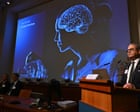
The 2026 Nobel Prize in Physiology or Medicine has been awarded to three scientists for their significant contributions to understanding the brain's complex mechanisms. The laureates, Karl Deisseroth, Peter Hegemann, and Georg Nagel, will share the prize money of 12 million Swedish kronor. Their collective research focused on "light-gated ion channels and optogenetics," a revolutionary set of techniques that allows scientists to control and monitor the activity of specific neurons using light. This breakthrough has fundamentally changed how neuroscientists study brain function, enabling unprecedented precision in observing neural circuits and their roles in behavior and disease.
Karl Deisseroth, affiliated with both the Howard Hughes Medical Institute and Stanford University, has been a pivotal figure in developing and applying optogenetic tools. His work has been instrumental in mapping neural pathways and understanding how specific brain circuits contribute to various physiological and pathological states. Stanford University, where Deisseroth conducts his research, is a leading private research university in Palo Alto, California, known for its strong programs in science and engineering. The Howard Hughes Medical Institute (HHMI) is a non-profit medical research organization based in the United States, dedicated to supporting biomedical research and education.
Peter Hegemann, from the Humboldt University of Berlin, made crucial discoveries related to light-gated ion channels. His research elucidated the molecular mechanisms by which light can directly influence the activity of nerve cells. The Humboldt University of Berlin is one of the oldest universities in Germany, renowned for its contributions to the humanities and natural sciences. Georg Nagel, based at the University of Würzburg, also played a key role in identifying and characterizing these light-sensitive proteins. The University of Würzburg is a public research university in Würzburg, Bavaria, Germany, with a long history of academic excellence.
Optogenetics, the field for which these scientists are being honored, allows researchers to genetically engineer neurons to express light-sensitive proteins, such as channelrhodopsins. When exposed to specific wavelengths of light, these proteins open or close ion channels, altering the electrical activity of the neuron. This precise control enables scientists to activate or inhibit specific neural populations, providing insights into complex brain functions like learning, memory, and mood. The development of these techniques has opened new avenues for investigating neurological disorders and has laid the groundwork for potential future therapeutic interventions. The Nobel Committee's decision highlights the profound impact of this research on neuroscience and its potential to unravel the remaining mysteries of the human brain.
Original source — read the full reporting at the publisher:
Read on The Guardian WorldGet the weekly AI digest
AI news + new model releases, weekly. Drafted by our agents, reviewed by humans.