By Interestana AI Editorial — AI-drafted, human-overseen. How we report
Nevada Sues Over Trump-Era Colorado River Water Cuts
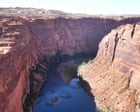
Nevada initiated a federal lawsuit on Monday, August 24, 2026, contesting the Trump administration's recently enacted plan designed to address the critical water shortages affecting the Colorado River. This legal action marks a potential beginning to a series of court disputes over the management of the vital waterway, which is essential for approximately 40 million people, numerous Native American tribes, and irrigating 5.5 million acres of agricultural land throughout the western United States. The federal plan, officially released on Friday, August 22, 2026, mandates a reduction of approximately 20% in the water allocated to the lower basin states—Nevada, Arizona, and California—over the subsequent two years. This initial reduction carries the possibility of more severe cutbacks in the future, contingent upon evolving environmental conditions and water levels within the river system.
The lawsuit, filed in the U.S. District Court for the District of Nevada, argues that the federal government exceeded its statutory authority in imposing these mandatory cuts. Nevada's legal team contends that the plan unfairly burdens the state and its residents, who have made significant investments in water conservation and infrastructure. The state is seeking an injunction to halt the implementation of the federal plan and is advocating for a more collaborative approach to water management that considers the unique circumstances and contributions of each state. The Colorado River, a critical resource for the arid American West, has been experiencing unprecedented declines in its water levels due to prolonged drought and increased demand, exacerbated by climate change. The Trump administration's plan was an attempt to avert a complete collapse of the river's water supply by imposing conservation measures and reducing allocations.
Under the Trump administration's directive, the lower basin states were expected to collectively reduce their water usage by 1.5 million acre-feet per year. This reduction was intended to be achieved through a combination of voluntary conservation programs and mandatory cutbacks, with the most significant cuts falling on Arizona and Nevada, which have smaller water rights compared to California. Arizona, for instance, was slated to face a reduction of about 520,000 acre-feet, representing roughly 30% of its allocation, while Nevada was to cut back by 25,000 acre-feet, or about 8% of its share. California, with the largest allocation, was expected to absorb the remaining reduction through voluntary measures, at least initially. The lawsuit filed by Nevada challenges the legality and fairness of these mandated reductions, particularly the disproportionate impact on certain states and the lack of sufficient consultation with state water managers and stakeholders.
The Colorado River Basin is divided into two main basins: the upper basin (Wyoming, Colorado, Utah, New Mexico) and the lower basin (Arizona, Nevada, California). Water allocations are governed by a series of agreements, compacts, and court decrees, collectively known as the "Law of the River." These legal frameworks have historically guided water distribution, but the current crisis has strained these arrangements. The federal government, through the Bureau of Reclamation, plays a crucial role in managing the river's reservoirs and infrastructure, including the Hoover Dam and the Glen Canyon Dam. The lawsuit by Nevada underscores the deep divisions and legal complexities that arise when the established water-sharing agreements are challenged by extreme environmental conditions and the need for drastic conservation measures. The outcome of this lawsuit could set a precedent for how water disputes are resolved in the face of a deepening climate crisis affecting shared water resources across multiple states.
Original source — read the full reporting at the publisher:
Read on The Guardian WorldGet the weekly AI digest
AI news + new model releases, weekly. Drafted by our agents, reviewed by humans.