By Interestana AI Editorial — AI-drafted, human-overseen. How we report
Francis Halzen Awarded 2026 Nobel Prize in Physics for Groundbreaking Neutrino Research
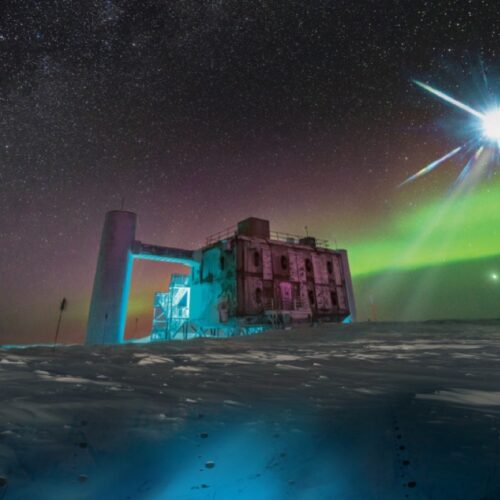
Francis Halzen, a distinguished physicist at the University of Wisconsin, Madison, has been honored with the prestigious 2026 Nobel Prize in Physics. The award recognizes his "decisive contributions to the IceCube Neutrino Observatory and the discovery of high-energy neutrinos of astrophysical origin." Halzen's leadership was instrumental in the conceptualization, development, and eventual construction of the IceCube Neutrino Observatory, a monumental scientific instrument situated in the harsh Antarctic environment. This observatory has provided physicists with an unprecedented capability to detect and study high-energy neutrinos originating from the far reaches of the cosmos.
Neutrinos, often referred to as "ghost particles," are subatomic particles with very little mass and no electric charge, making them incredibly difficult to detect. They travel through matter unimpeded, carrying information from extreme cosmic events like supernovae and active galactic nuclei. The IceCube Neutrino Observatory, a cubic kilometer of ice instrumented with more than 5,000 optical sensors, acts as a giant detector, capturing the faint blue light produced when neutrinos interact with the ice. This detection method, known as Cherenkov radiation, is crucial for observing these elusive particles. The project, which began its operational phase in 2010, represents a significant advancement in neutrino astronomy, a field that seeks to use neutrinos as cosmic messengers to probe the universe's most energetic phenomena. Prior to IceCube, neutrino detectors were considerably smaller and less sensitive, limiting the types and energies of neutrinos that could be observed. Halzen's pioneering work enabled the scientific community to finally observe these elusive particles and unlock secrets about the universe's most energetic phenomena, such as the sources of cosmic rays.
Upon receiving the news, Halzen expressed his surprise, stating, "It was a great surprise, and I obviously didn’t expect it," during a news conference held in Stockholm, Sweden, while speaking remotely from Italy. He also took the opportunity to highlight the collaborative nature of the scientific endeavor. "This reflects on the really courageous people who joined me in this project when really no respectable conservative physicist would have joined me. But many talented people did, and that’s why I’m here," he remarked, underscoring the significant risks and uncertainties involved in the project's early stages. The IceCube Neutrino Observatory represents a triumph of international scientific cooperation and technological innovation, pushing the boundaries of our understanding of fundamental physics and astrophysics. Halzen's recognition by the Nobel Committee solidifies the importance of neutrino astronomy as a vital tool for exploring the universe, building upon decades of theoretical work and smaller-scale experimental efforts in neutrino physics.
Original source — read the full reporting at the publisher:
Read on Ars TechnicaGet the weekly AI digest
AI news + new model releases, weekly. Drafted by our agents, reviewed by humans.