By Interestana AI Editorial — AI-drafted, human-overseen. How we report
NASA's $4.3 Billion Nancy Grace Roman Space Telescope Launches to Expand Cosmic View
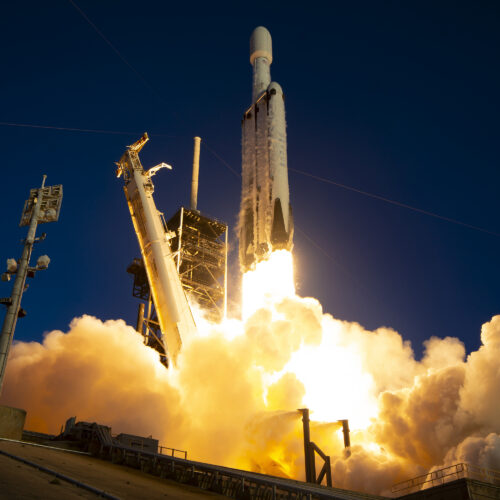
NASA's ambitious Nancy Grace Roman Space Telescope, a flagship astrophysics mission with an estimated cost of $4.3 billion, has successfully commenced its journey into the cosmos. The launch took place on Sunday from the Kennedy Space Center in Florida, marking a significant step forward in humanity's quest to understand the universe's most profound mysteries, particularly the enigmatic forces driving its expansion. The Roman telescope is designed to be a "great observatory," a designation given to large, advanced space observatories that significantly advance scientific understanding. Its scientific payload includes a powerful 300-megapixel camera, a substantial leap in imaging capability, which will leverage a refurbished spy mirror. This mirror, originally designed for intelligence gathering, has been repurposed to provide exceptional optical performance for astronomical observation. The primary objective of the Roman mission is to dramatically extend the observational reach of existing NASA observatories. It boasts a field of view that is approximately 100 times wider than that of the iconic Hubble Space Telescope, a venerable instrument that has revolutionized astronomy since its launch in 1990. This expansive view will enable astronomers to survey vast swathes of the sky with unprecedented efficiency, making it ideal for large-scale surveys. Furthermore, Roman is designed to complement the groundbreaking, deep-field observations conducted by the James Webb Space Telescope (JWST), which was launched in 2021. While Webb excels at peering into the distant universe with exquisite detail, Roman will provide a broader context and identify targets for more in-depth study. The Roman mission represents only the second major NASA-led astrophysics endeavor to launch in the 21st century, underscoring the significance of this new observatory. In a notable contrast to the Webb telescope, which experienced numerous years of delays and cost overruns before its eventual launch, the Roman mission demonstrated remarkable project management and technological readiness. It arrived at the launch pad a full nine months ahead of NASA's commitment to send it into orbit by May 2027, highlighting a more streamlined development process. The telescope's scientific goals are far-reaching, including mapping the distribution of dark matter and dark energy, two of the universe's most elusive components. It will also study the formation and evolution of exoplanets, planets outside our solar system, utilizing advanced microlensing techniques to detect and characterize them. Additionally, Roman will investigate the properties of galaxies across cosmic time, providing crucial data to refine cosmological models and address fundamental questions about the universe's composition, evolution, and ultimate destiny. Its sophisticated instrumentation, including a wide-field imager and a high-latitude survey instrument, will work in tandem to achieve these ambitious scientific objectives, positioning Roman as a pivotal instrument for future astronomical research and discovery.
Original source — read the full reporting at the publisher:
Read on Ars TechnicaGet the weekly AI digest
AI news + new model releases, weekly. Drafted by our agents, reviewed by humans.