By Interestana AI Editorial — AI-drafted, human-overseen. How we report
NASA Swift Observatory Rescue Mission Falls Short
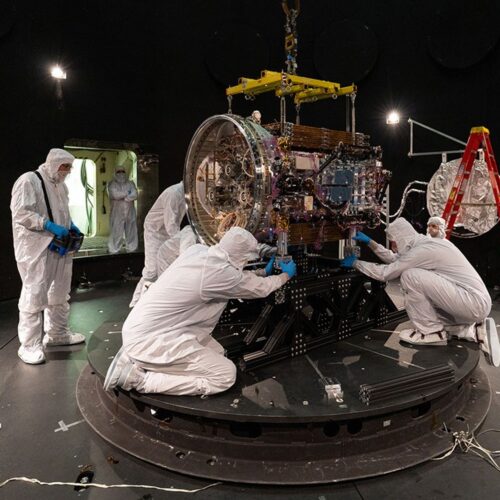
An ambitious effort to save NASA's Neil Gehrels Swift Observatory from deorbiting ultimately failed, but the intricate planning and novel approach employed to make the rescue possible have been recognized by government and commercial space officials. The Swift Observatory, a vital instrument for observing cosmic events like gamma-ray bursts and supernovae, faced the risk of falling out of its orbit and burning up in Earth's atmosphere. To avert this, NASA initiated a rescue mission with a contract awarded to Katalyst Space Technologies in September. This contract, valued at $30 million, tasked Katalyst with developing and launching a satellite capable of capturing Swift and boosting it into a higher, more stable orbit. The timeframe given to Katalyst was nine months, a tight schedule for such a complex operation. The rescue spacecraft, named Link, was successfully launched on July 3. Following its launch, Link underwent initial checkouts to ensure its systems were functioning correctly for the critical rendezvous with Swift. However, a few weeks after its launch, Link experienced a malfunction that caused it to spin out of control, rendering it unable to proceed with its primary mission. Consequently, NASA announced in August that Link would not be able to reach Swift as planned, leading to the abortion of the rescue mission. Despite the mission's failure to save the observatory, the innovative strategies and the collaborative spirit demonstrated by NASA and Katalyst Space Technologies in attempting to extend the life of the Swift Observatory are considered significant. The mission highlighted the growing capabilities and potential of commercial space companies to undertake complex orbital servicing tasks, a capability that could be crucial for the future of space exploration and asset management. The Swift Observatory, launched in 2004, has been instrumental in numerous astronomical discoveries, and its potential loss underscored the importance of developing robust solutions for maintaining the longevity of valuable space assets. The approximately $500 million cost of the Swift Observatory also emphasized the significant investment NASA sought to protect through this rescue attempt. The failure of the Link spacecraft to execute its mission underscores the inherent risks and technical challenges associated with in-space servicing and orbital mechanics, even with advanced planning and execution.
Original source — read the full reporting at the publisher:
Read on Ars TechnicaGet the weekly AI digest
AI news + new model releases, weekly. Drafted by our agents, reviewed by humans.