By Interestana AI Editorial — AI-drafted, human-overseen. How we report
Moroccan Police Arrest 111 Migrants Attempting Ceuta Crossing
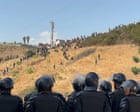
Moroccan police apprehended 111 individuals on Saturday as they attempted to enter Ceuta, Spain's North African territory. This incident occurred amidst heightened security measures on both the Moroccan and Spanish sides of the border, following social media posts that had encouraged another mass crossing. The attempted influx on Saturday took place just two weeks after a significantly larger surge of migrants into Ceuta. In that earlier event, over 72,000 migrants managed to enter the territory, a situation that subsequently generated considerable diplomatic friction within the European Union and amplified anti-immigration sentiments among global far-right political factions. The prior mass crossing also resulted in a tragic loss of life, with at least 96 individuals perishing in their attempts to reach European soil. The recent arrests underscore the ongoing challenges and risks associated with irregular migration across the Mediterranean. Ceuta, along with the Spanish enclave of Melilla, serves as a primary gateway for migrants from sub-Saharan Africa seeking to enter the European Union. These territories are geographically located on the northern coast of Africa but are politically part of Spain. Consequently, they are often the focal point for migration attempts, leading to recurrent security operations and humanitarian concerns. The Moroccan authorities play a crucial role in border management, often collaborating with Spanish and EU agencies to control migration flows. However, the persistent calls for mass crossings, often amplified through social media platforms, indicate the enduring pull factors that drive individuals to undertake perilous journeys. These factors typically include economic hardship, political instability, and conflict in their countries of origin, coupled with the perceived opportunities and safety offered by European nations. The heightened security response, involving both Moroccan police and Spanish border guards, reflects the sensitivity of these border crossings and the political implications they carry. The EU has consistently sought to strengthen its external borders and cooperate with transit countries like Morocco to manage migration. However, such efforts often face criticism from human rights organizations concerned about the treatment of migrants and asylum seekers. The events in Ceuta highlight the complex interplay of security, migration, and human rights at Europe's southern frontiers. The continued attempts to cross, despite the risks and the increased security presence, demonstrate the desperation of many individuals seeking a better life. The social media calls for mass crossings suggest a coordinated or at least widely disseminated intent, which poses a significant challenge for border control agencies. The response from Moroccan police indicates a proactive effort to prevent large-scale breaches, aligning with broader European strategies to curb irregular migration. The fallout from the previous mass crossing, which led to tensions within the EU and fueled anti-immigration rhetoric, likely contributed to the intensified security posture observed during Saturday's events. The number of arrests, 111, while substantial, is considerably lower than the tens of thousands who entered in the preceding weeks, suggesting that the increased security measures were effective in deterring a similar scale of entry. The situation remains dynamic, with ongoing efforts by migrants to reach Europe and by authorities to manage and control border crossings.
Original source — read the full reporting at the publisher:
Read on The Guardian WorldGet the weekly AI digest
AI news + new model releases, weekly. Drafted by our agents, reviewed by humans.